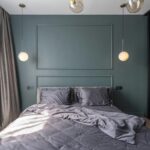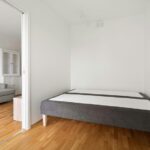
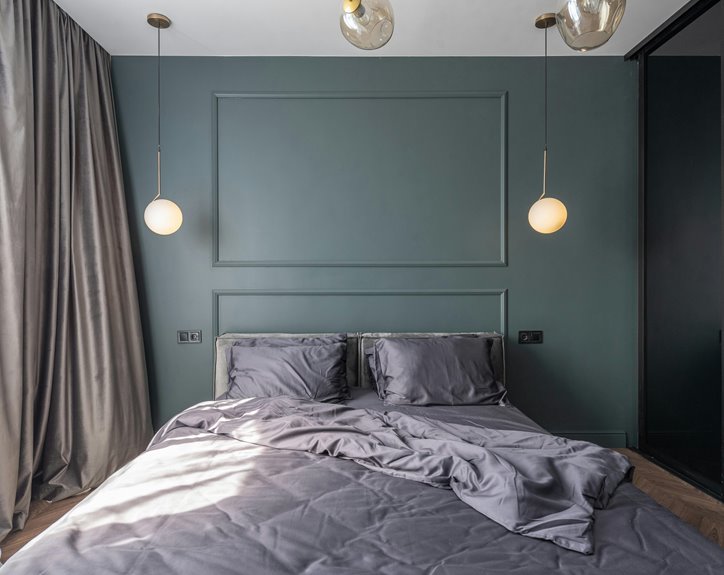
I’ve discovered you don’t have to choose between style and function in a small bedroom.
Start with a light, neutral palette—creams and soft grays make spaces feel bigger.
Layer textures like tufted shams and faux fur throws for depth without clutter.
Add mirrors opposite windows to bounce light around.
Go vertical with wall shelving and pick multifunctional pieces like beds with drawers.
Keep surfaces calm and minimal, then anchor everything with one key piece.
These elements work together to create a cohesive bedroom.
Choose a Light, Neutral Color Palette to Maximize Space
I learned this trick when decorating my own small bedroom. A light palette—creams, soft grays, pale blues—makes your room feel more spacious. These neutral colors reflect natural light beautifully, making everything brighter and airier.
A light palette of creams, soft grays, and pale blues makes small bedrooms feel more spacious while reflecting natural light beautifully.
Here’s what I did: I paired my light walls with white-toned wooden furniture. This consistent approach prevents the space from feeling cluttered or heavy. The key? Let your light palette be the backdrop.
I added sheer window treatments to maximize natural light while keeping my privacy intact. Then came the textures—a tufted sham, a faux fur throw in cream tones. These touches provide warmth without overwhelming the space.
Your small bedroom doesn’t need bold colors to have style. Simplicity works.
Invest in Multifunctional Furniture That Serves Double Duty
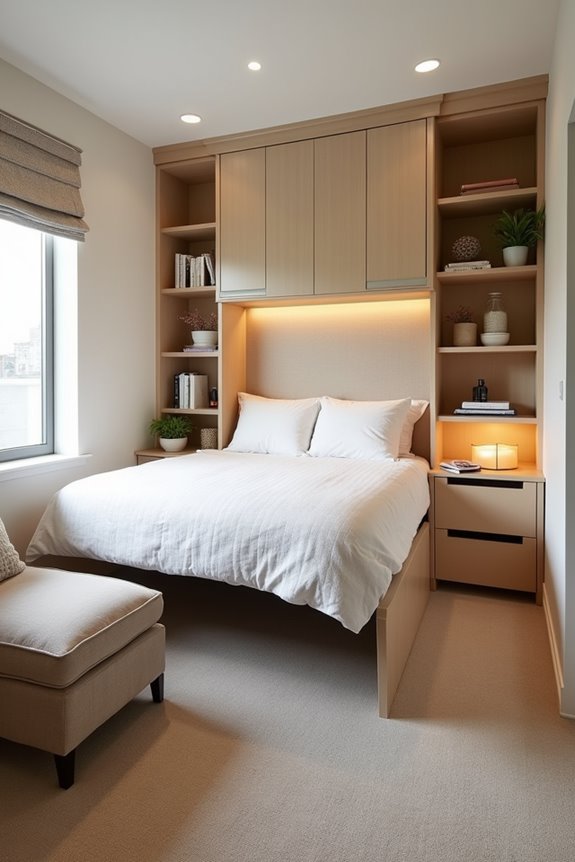
Now that you’ve got your light, airy backdrop in place, it’s time to fill your small bedroom smartly—and that means choosing furniture that works harder for you.
Multifunctional furniture is essential for small spaces. Dual-purpose pieces help tight spaces become efficient and functional. Consider these options:
| Furniture Type | Space-Saving Benefit |
|---|---|
| Bed with drawers | Built-in storage without extra footprint |
| Vanity-desk combo | Serves two functions in one corner |
| Storage bench | Seating plus hidden organization |
| Nightstand with pull-out shelf | Extra surface, uncluttered top |
A low bed frame creates breathing room overhead, while wall-mounted solutions and built-in storage keep floors clear. Pairing a low frame with a statement pendant light maintains that airy feel. These space-saving choices let you decorate beautifully without cramping your style or your actual space.
Position Furniture to Maximize Walkable Space
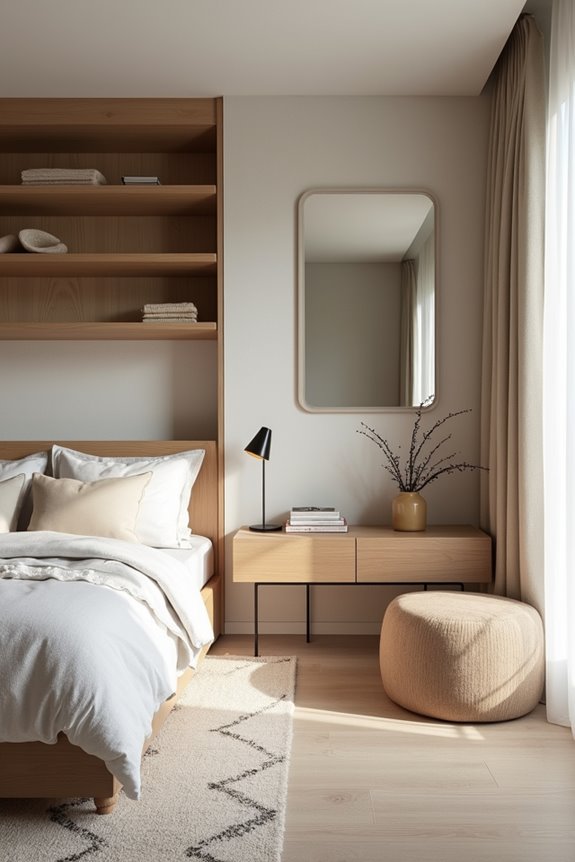
Why does a small bedroom feel even smaller when you’ve got furniture scattered everywhere? Bedroom layout directly impacts how spacious your room feels. Push your queen bed against the wall—this creates a clear central path and opens up your floor.
A low bed frame frees up vertical space for a pendant light, making everything feel airier. For small footprint furniture, choose a compact dresser with maximum storage and a nightstand featuring built-in drawers and a pull-out shelf. Smart bed placement keeps essentials organized without cluttering surfaces.
An octagonal mirror reflects light beautifully, visually expanding the room. Your lighting strategy matters too. These moves work together to create a space that feels larger and suited to your needs.
Use Mirrors to Make Small Bedrooms Feel Larger
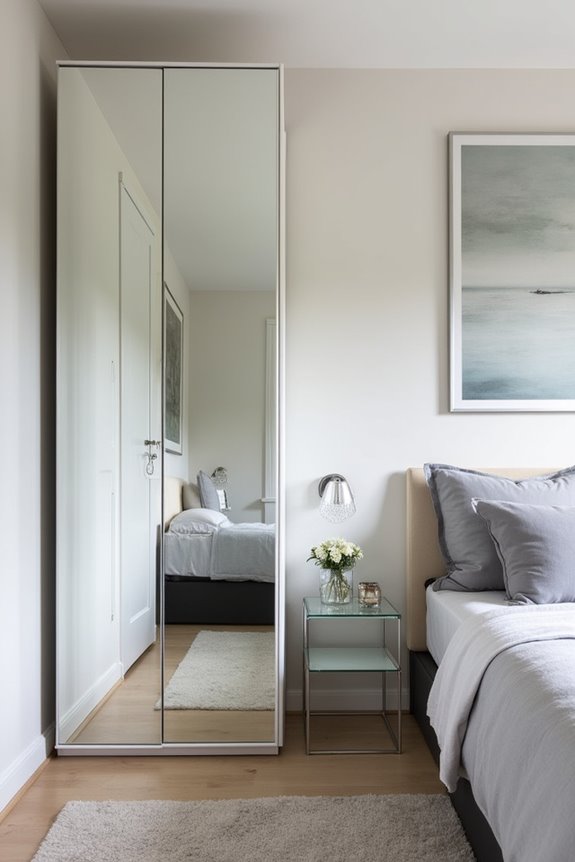
I’ve found that mirrors work well when you’re working with tight square footage, and I’m excited to show you exactly how to use them without making your room feel like a fun house. The key isn’t just hanging any mirror anywhere—it’s about where you place them and what surfaces you choose to bounce light around your space. Let me walk you through the strategic techniques that’ll change how your small bedroom feels.
Strategic Mirror Placement
When you’re working with a small bedroom, mirrors become one of your best design allies—they’re cost-effective alternatives to structural changes.
Placement matters significantly. Hanging mirrors higher draws your eye upward, creating vertical space that makes your room feel taller. Position them opposite windows to catch natural light and bounce it around, making everything brighter and airier. An octagonal or large mirror works well for this reflection technique.
| Mirror Type | Best Location | Benefit | Cost |
|---|---|---|---|
| Large wall mirror | Opposite window | Maximizes natural light | $40-80 |
| Recessed mirror | Above dresser | Clean, uncluttered look | $60-120 |
| Framed octagonal | Corner near lamp | Doubles perceived size | $50-100 |
| Sconce-paired mirror | Beside bed | Amplifies brightness | $75-150 |
Pair mirrors with lamps or sconces nearby. Built-in options keep things sleek. This approach makes your space feel more spacious.
Reflective Surface Techniques
Because mirrors reflect light and space, they’re one of the most effective tricks for making a cramped bedroom feel larger. Reflective surfaces do far more than show your face—they change how your room actually feels.
Here’s what works best:
- Place an oversized mirror opposite your window to bounce natural light throughout the space
- Pair mirrors with light wall colors to amplify that airy, open feeling
- Mix different mirror sizes and shapes for visual interest without clutter
- Mount mirrors vertically near built-in storage to maximize reflective space while keeping surfaces clean
The key? Keep your mirror frames minimal and simple. Heavy frames add visual weight you don’t need in a small bedroom. When you strategically position reflective surfaces, you create an illusion of doubled space—and that’s the bedroom upgrade worth having.
Use Vertical Storage to Keep Floors Clear and Open
When I redesigned my cramped bedroom, I realized that drawing the eye upward was exactly what I’d been missing—tall shelves and wall-mounted units instantly made the space feel bigger while freeing up precious floor room. I started placing my everyday items on lower shelves within arm’s reach and reserved the higher spots for things I rarely need, like extra blankets or old books. This simple shift made my bedroom less cluttered and more open, proving that sometimes the best way to expand a small space is to build up, not out.
Wall-Integrated Shelving Solutions
How do you squeeze storage into a room that’s already tight on space? Wall-integrated shelving is your answer. I’ve discovered that built-in storage works well in small bedrooms by keeping floors clear and sightlines open. Here’s what makes wall shelves effective:
- High placement frees floor space while maintaining an airy, light feel
- Inset designs conceal radiators and awkward features seamlessly
- Multi-use storage holds books, decor, and essentials together, reducing clutter without bulk
- Seamless architectural integration works with existing walls, not against them
When I installed space-saving wall-integrated shelving, I noticed immediate breathing room. The clutter reduction felt genuine—not forced. These shelves work because they’re functional *and* beautiful. You’re not sacrificing style; you’re gaining smart storage that belongs in your bedroom naturally.
High Placement Maximizes Floor Space
The real approach to a small bedroom involves focusing on walls rather than floor space. I installed high placement shelving above my dresser and noticed the room felt larger.
Wall-mounted storage made a significant difference. By choosing ceiling-adjacent storage solutions, I kept everyday items accessible without cluttering the floor. Tall wardrobes and stacked cabinets held everything while taking up minimal space below.
Built-ins brought intentionality and spaciousness to my bedroom. I mounted shelves at eye level and higher, drawing attention upward naturally. This vertical storage approach freed up floor space for moving around comfortably.
You don’t need fancy furniture. Smart placement does the work. When you embrace high placement and wall-mounted storage, your small bedroom gains the breathing room it needs.
Choose Low, Open Furniture to Keep the Room Feeling Light
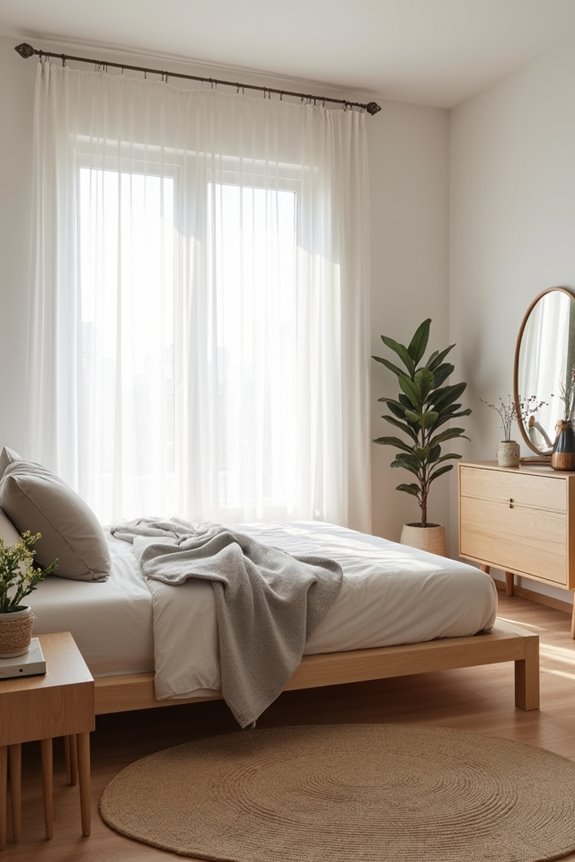
One of my favorite tricks for opening up a small bedroom is swapping out bulky furniture for low, airy pieces—and I really do mean low. When I ditched my heavy dresser for a slim-profile one, the room felt more spacious. Low-profile bed frames keep your ceiling feeling higher, while open-furniture designs let light flow through instead of blocking it.
Here’s what works best:
- Floating nightstands create walking space underneath
- Lightweight dressers with reflective surfaces bounce light around
- Multi-function storage benches handle clutter without bulk
- Slim wooden frames reduce visual weight
These pieces are functional and practical. Your room feels larger because it actually is more open. Low furniture that stays out of the way gives you the space you need.
Add Texture Through Fabric Without Cluttering Surfaces
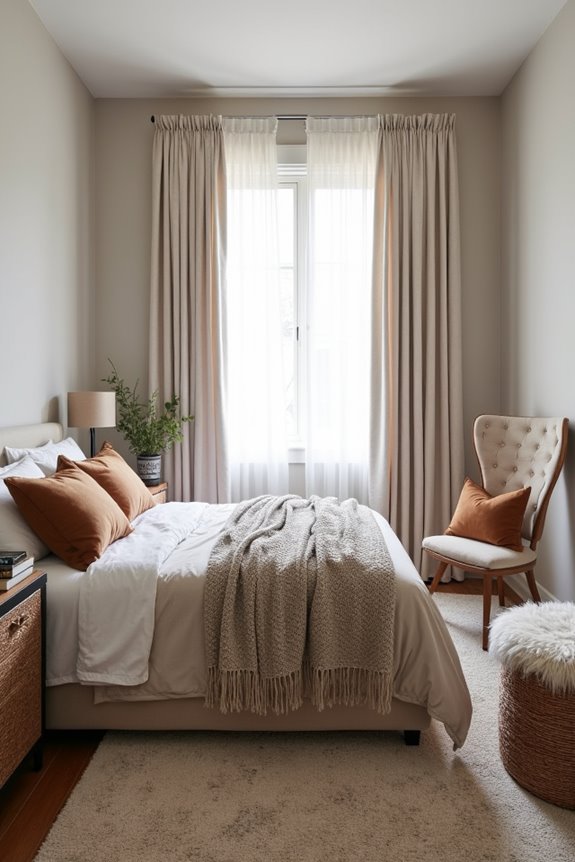
I’ve found that layering textures through fabrics—think tufted shams, a Mongolian lamb throw, and a soft rug that you can actually feel under your feet—works well for making a small bedroom feel rich without cramming it full of stuff. When you stack these tactile elements strategically on your bed and floor, you’re creating visual interest that doesn’t eat up wall space or clutter your surfaces. The trick is choosing fabrics in warm creams and beiges with just a whisper of pale lilac, so every touchable detail actually makes the room feel calmer instead of busier.
Layering Textiles Strategically
When you’re working with a small bedroom, textiles become your hidden asset for adding warmth and visual richness without cramming your surfaces full of stuff. I’ve discovered that layering strategically improves the entire space.
Start by building your foundation with these elements:
- White base bedding topped with calming secondary colors like creams, beiges, or pale lilac accents
- Tufted shams paired with a Mongolian lamb throw for luxe texture
- Faux fur throw draped at the bed’s foot for coziness
- Neutral print rug beneath to anchor depth and warmth
Light wall colors reflect more sunshine, making your small-space bedroom feel bigger. Pair them with sheer window fabrics that dance with natural light. These neutral textiles work together, creating cohesion without competing for attention. You’re building softness through layers, not clutter.
Choosing Fabrics for Visual Depth
Now that you’ve got your layering foundation down, it’s time to get intentional about which fabrics actually do the heavy lifting in your small bedroom.
I’ve learned that textures like tufted shams and Mongolian lamb throws add real depth without cluttering your space. They feel good and look purposeful. Stick with a neutral palette of creams, beiges, and pale lilac accents—it keeps everything cohesive and airy.
For layered bedding, start with white as your base, then add a calming secondary color. An oversized gingham pattern works well as your room-wide textile without overwhelming surfaces.
Don’t forget sheer window treatments. They soften light beautifully and layer your space without heavy visual weight. These fabric choices work together, creating dimension that makes your room feel bigger and more inviting.
Balancing Texture With Open Space
The trick to making a small bedroom feel both cozy and spacious comes down to this: you’ve got to add texture without piling stuff everywhere. I’ve learned that strategic texture layering actually makes rooms feel roomier, not cramped.
Here’s how I do it:
- Layer tufted shams with lightweight throws for depth without bulk
- Hang sheer curtains to soften light while maintaining airiness
- Use multi-role fabrics that work as bedding and decor simultaneously
- Stash extra textiles under-bed storage to keep surfaces clear
I stick to a lighter palette—creams, beiges, pale lilac—which keeps everything feeling open. The key? Each fabric serves double duty. My Mongolian lamb throw adds luxury while my sheer curtains filter light beautifully. This way, I’m creating genuine coziness that doesn’t sacrifice the spacious feeling I want.
Maximize Light in Tiny Bedrooms to Expand the Feel
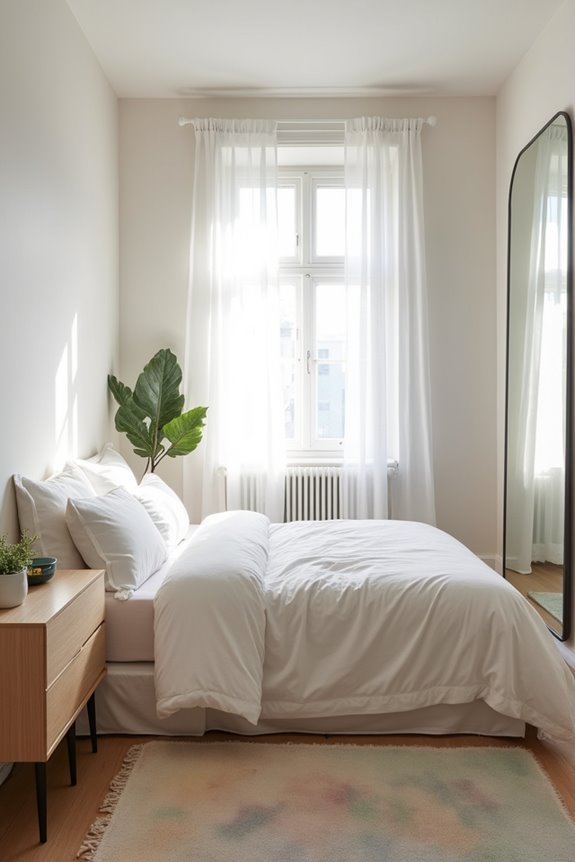
How do you make a shoebox-sized bedroom feel less like a cave? Light is your key tool. I’ve discovered that painting my ceiling a soft white opens up the space immediately—it reflects light instead of absorbing it. Then I swapped heavy curtains for sheer ones that let natural light flood in while keeping my privacy intact.
Mirrors became my best friends. I hung one opposite my window, and suddenly my small space felt doubled. I also chose glossy nightstands and reflective surfaces for my multifunctional furniture, which bounces light around effectively.
For wall space, I went vertical with tall shelving units that draw eyes upward. This maximizes light distribution while creating smart storage. These changes made my tiny bedroom brighter and more inviting.
Pick One or Two Statement Pieces Sized for Small Rooms
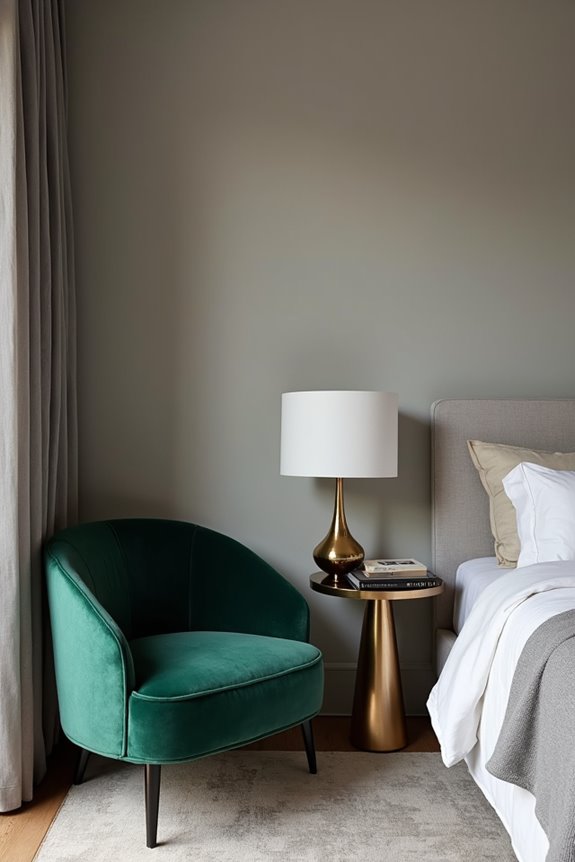
When I finally stopped trying to fill every corner of my tiny bedroom, things improved.
I learned that one bold piece—like an oversized lamp or striking headboard—creates the visual anchor my room needed. Here’s what works best for small rooms:
- Choose compact furniture with clean lines and light finishes
- Pair your statement piece with minimal surrounding decor
- Select multifunctional items like storage benches or bed frames
- Coordinate accents around a singular design aesthetic
Instead of scattering things everywhere, I picked a sculptural chair in soft gray and let it anchor my whole room. Everything else stayed simple. The organized aesthetic made my space feel deliberate, not cramped. When you’re decorating small rooms, sometimes restraint works better than abundance—and that’s when your style actually comes through.
Keep Surfaces Clutter-Free to Amplify Calm and Order
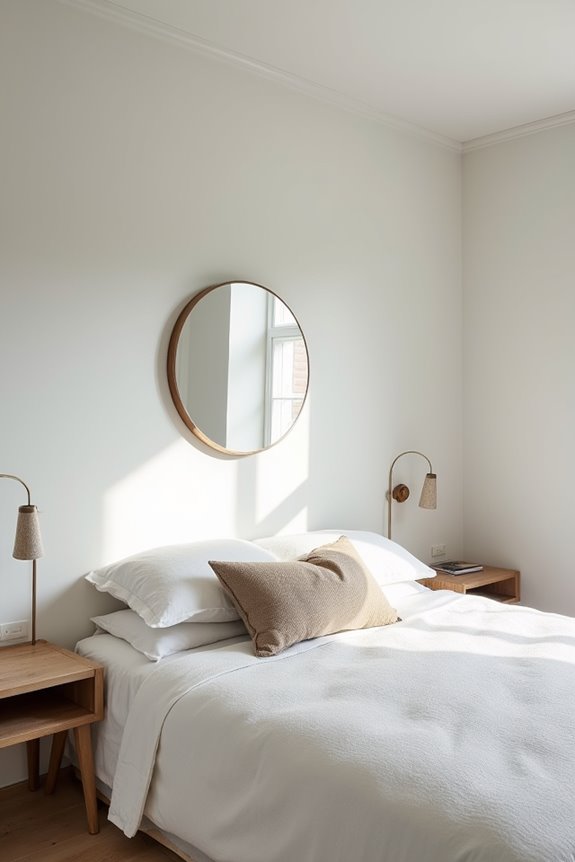
Once you’ve anchored your room with those few perfect pieces, you’ll notice something: surfaces become your real challenge. I learned this the hard way—cluttered nightstands kill the calm you’re building.
Here’s what I do: I use multi-use furniture like a bed with storage drawers underneath. This lets me keep things hidden yet accessible. Wall-mounted shelves reduce clutter on your floor, creating more open space. Under-bed storage with fabric bins hides seasonal items neatly.
For bedroom storage that works, I stick to a cohesive color palette with textures. A textured throw or wooden organizer adds visual interest without creating disorder. I limit decorative items to what truly matters—maybe one photo or plant.
When everything has a home and surfaces stay clear, your small bedroom feels different. It’s not just neat; it feels peaceful. That’s what we’re really after.