Kitchen desks are staging a comeback because they’re solving real problems we all face. You’re juggling work calls, meal planning, and family life simultaneously, so why not create one zone that handles it all? You don’t need a renovation—just a slim desk that tucks into existing cabinetry or sits by a window. Built-in storage keeps the chaos at bay, warm wood finishes blend smoothly, and natural light makes those admin tasks feel less like work. Here’s how to make this work in your space.
Why Kitchen Desks Support Hybrid Work Without Extra Space
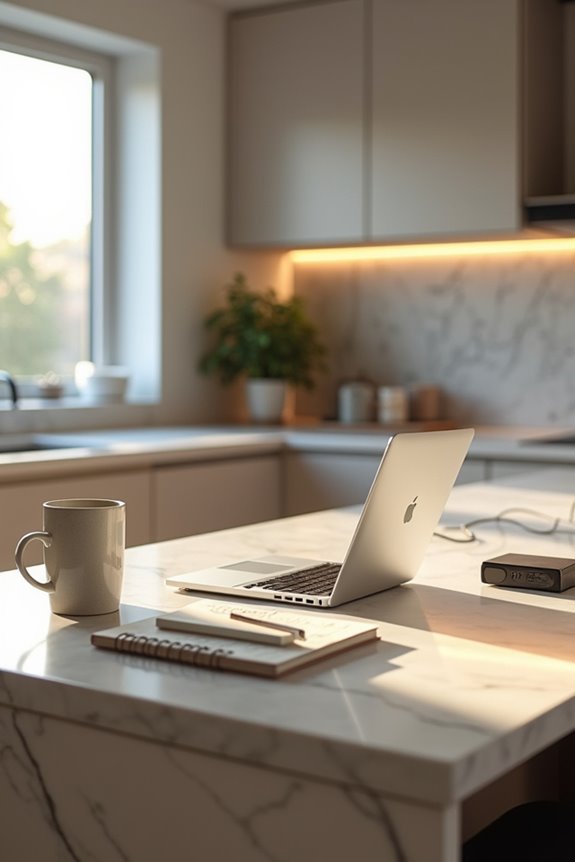
How’re you supposed to squeeze a home office into a place that’s already bursting at the seams? Kitchen desks solve this perfectly. You’re not sacrificing precious square footage or feeling cramped anymore. These hybrid work solutions tuck into existing cabinetry and island layouts, giving you a dedicated workspace right where you need it.
They combine functionality with connection. You’re still part of the action while staying focused on work tasks. Built-in charging ports and cable management keep your devices powered without cluttering countertops. The space-saving design means you’ve got everything within arm’s reach—your coffee, your laptop, your planning materials.
Kitchen desks make that informal zone into something useful. You’re not isolated in a separate office. Instead, you’re present, connected, and working smart.
Integrate Desks Into Your Existing Storage and Cabinet Plan
Now that you’ve got your workspace tucked into the kitchen flow, let’s talk about making it work with what you’ve already got. Your cabinet plans don’t need a complete overhaul. Instead, position a slim desk alongside existing cabinetry or near your pantry zone. This desk integration keeps everything organized while working with your kitchen’s current layout.
Think storage optimization: pull-out filing drawers fit perfectly beneath the desk surface, and shallow shelving preserves your walkways. Match your desk finish to existing wood tones or flat-panel doors—it’ll look like part of the original plan.
Hidden charging stations and cable management keep things tidy. You’re not fighting your kitchen’s bones here. You’re working with them, creating a space that functions as part of your home’s design.
Keep Work Surfaces Organized and Clutter-Free
Why does a messy desk make you feel like your whole life’s spinning out of control? I get it. A cluttered workspace drains your energy before you even start your day.
That’s where smart cabinet organization helps. Built-in storage solutions like pull-out waste bins and spice drawers create order from chaos. You’re not just tidying up—you’re reclaiming peace of mind.
| Storage Solution | What It Does |
|---|---|
| Pull-out waste bins | Hides trash, keeps counters clean |
| Spice drawers | Organizes cooking essentials neatly |
| Revolving corner trays | Maximizes awkward spaces efficiently |
Clutter-free work surfaces help you focus. When everything has a home, you’re not hunting for supplies. You’re working smoothly. Two-tone finishes blend your desk with surrounding cabinetry, creating that uncluttered visual field you want. It’s straightforward—just thoughtful organization that works.
Position Your Desk to Separate Work From Cooking Zones
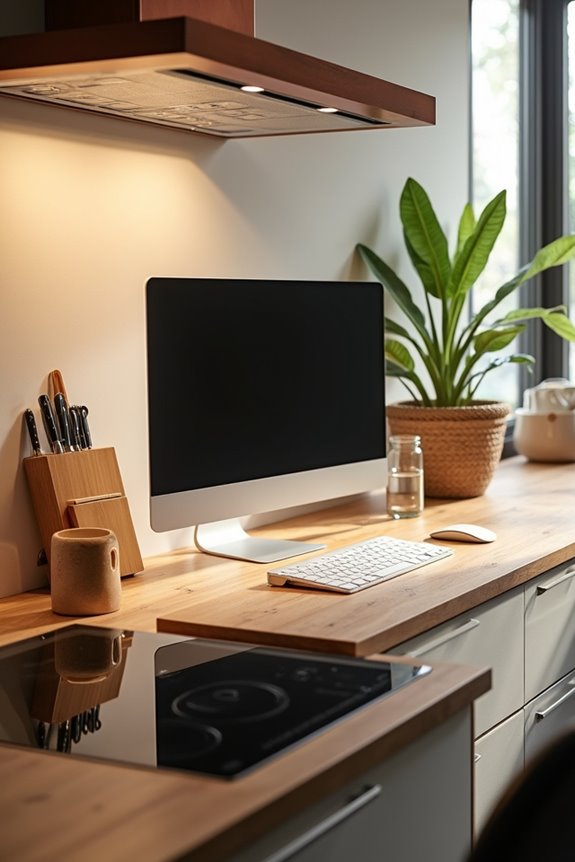
When I first brought my desk into the kitchen, I realized the biggest consideration wasn’t the desk itself—it was figuring out where to put it so cooking and working didn’t interfere with each other. You’ll want to think about your kitchen’s natural flow: where do you move when you’re prepping meals, and where can you tuck a desk so it’s nearby but out of the main traffic lane? I’ve found that positioning mine along the perimeter, maybe near a window or against a quieter corner, lets me stay connected to family life while keeping my laptop safe from flour dust and splatters.
Zoning Kitchen Work Areas
How’d you like to tackle your to-do list without dodging someone reaching for the cutting board?
I’ve discovered that desk zoning works well in my kitchen. By positioning my workspace in a separate corner, I created two distinct kitchen work zones—one for cooking, one for me. This desk zoning setup means my bill-paying and meal planning happen away from the action, letting my family cook without tripping over my paperwork.
My multi-use workspace handles everything. I sketch recipes at my desk while someone preps vegetables across the room. No interruptions. No chaos. The buffer zone I’ve built naturally directs traffic flow, keeping the cooking zone clear and focused.
This approach feels less cramped and more organized. Everyone has their space. I finally belong in my kitchen without getting in the way.
Creating Physical Space Separation
The key is to position your desk away from the cooking action—not just anywhere in the kitchen, but strategically placed to create a real barrier between your work zone and where the cooking happens. Tucking your desk near the kitchen’s edge, away from the stove and prep area, improves how you work. It’s about respecting both spaces. When you use a multifunctional island or subtle cabinetry as a divider, you’re creating functional separation in your open-plan kitchens without sacrificing flow. This desk separation keeps cooking clutter from derailing your focus on emails or meal planning. You’re not fighting for space anymore. Instead, you’re part of a rhythm where work and cooking coexist, each with breathing room.
Desk Placement and Layout Strategy
Partial barriers or cabinetry between your desk and cooking zone muffle noise and hide clutter, helping you focus. Add nearby storage and charging outlets to make the space functional. Natural light nearby works well too. Your kitchen becomes a workspace where you can actually work, rather than feeling cramped.
Style Kitchen Desks to Match Warm Wood and Timeless Cabinetry
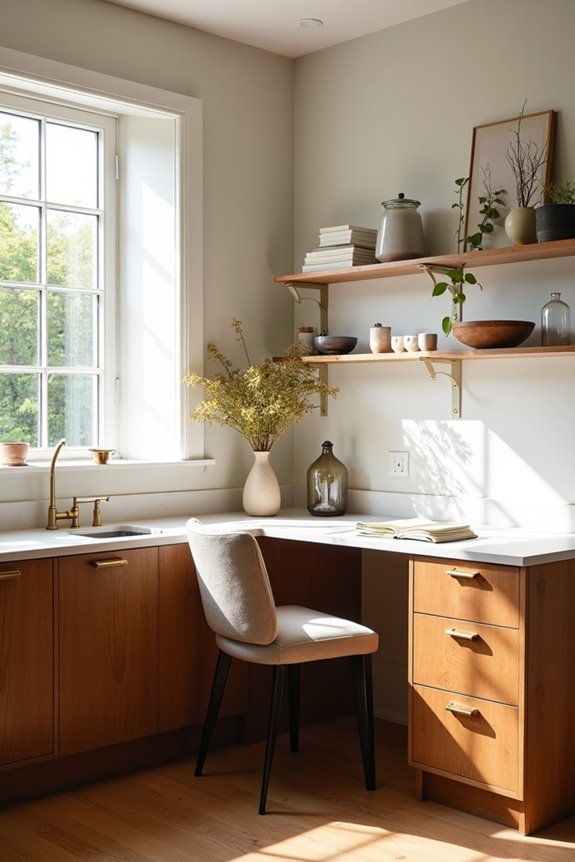
Creating a kitchen desk that feels like it belongs in your space starts with matching it to your existing cabinetry and wood tones. Selecting warm wood finishes—like oak or walnut—creates a cohesive look with timeless cabinetry.
Your kitchen desk works best when it mirrors your cabinets. This consistency makes the whole room appear well-planned and connected. Pair rich woods with aged hardware finishes that suggest tradition without demanding attention.
What grounds the design is the use of contrasting elements. A painted island or surround balances the natural wood warmth. Add traditional lighting and freestanding furniture pieces, and your desk becomes a functional workspace that fits your kitchen.
This collected feeling is what many homeowners seek when planning their kitchens.
Find the Right Spot in Open-Plan Kitchens
When I’m designing an open-plan kitchen, I think about how to zone the space so your desk doesn’t feel like it’s competing with the cooking area—maybe tucking it along a wall or into cabinetry so traffic flows naturally around it. You’ll want to position your workspace where it catches natural light from a window if possible, which makes those work-from-home hours feel less isolating and keeps your workflow smooth as you move between answering emails and prepping dinner. Getting the placement right means your desk becomes part of the kitchen’s rhythm instead of disrupting it.
Zoning Open Kitchen Spaces
Where should you actually put a kitchen desk in a space that doesn’t have walls to help you out? Zoning really changes things. You’ll want to position your desk near the edge of your kitchen, away from your cooking triangle. This keeps things flowing naturally without cramping your cooking style.
I place mine adjacent to my dining area—it creates a natural boundary without feeling blocked off. The desk integration works best when it matches your existing cabinetry and hardware, so everything feels planned and consistent.
Natural light matters too. I positioned mine where afternoon sun hits, making bill-paying and meal planning actually pleasant tasks. When your workspace blends into your open-plan kitchen, you’re not just adding furniture. You’re creating a space where people belong in a shared area.
Defining Workflow and Traffic
Now that you’ve got the basic zoning down, it’s time to think harder about how people actually move through your kitchen—because placing your desk in the wrong spot can turn your workspace into a roadblock.
Smart desk placement means positioning it along a secondary wall or natural pathway. This keeps your workflow smooth without interrupting your cooking triangle. Think of your desk as a transitional zone—somewhere between prep, cooking, and cleaning that feels purposeful, not intrusive.
Position it near storage. Quick access to pantries, cabinetry, and recipes means less foot traffic disruption. Consider positioning near dining areas too. You’ll supervise dinner prep while staying connected to family life. Traffic flow becomes intuitive. Your desk becomes part of the kitchen’s rhythm, not against it.
Positioning Near Natural Light
How’s your desk going to feel if you’re squinting at your screen all day?
I’ve learned that natural light makes a real difference. When I positioned my desk near a window in our open-plan kitchen, the change was immediate. No more harsh glare. No more headaches.
The trick? Find a wall that catches consistent sunlight. This placement lets you work comfortably while organizing receipts, planning meals, and tackling admin tasks. Your desk becomes a calm, pleasant spot.
I’ve also discovered that strategic desk placement near living or dining areas creates clear boundaries without disrupting the flow. Add shelving nearby, and suddenly your recipe collections and stationery feel organized and purposeful.
Natural light isn’t just practical. It’s mood-lifting. In open-plan kitchens, thoughtful desk placement anchors your entire space—both functionally and emotionally.
Fit Functional Desks Into Small and Medium Kitchens
Most of us don’t have sprawling kitchens with room to spare, yet we’re craving a dedicated workspace right where we prep meals and grab our morning coffee. The good news? You don’t need much space to make it work.
Pull-out and fold-down desks tuck neatly into cabinetry or under counters, giving you a compact workspace that disappears when you’re done. These solutions keep your kitchen feeling open and uncluttered. Pair your desk with integrated storage—think filing drawers and hidden power outlets—and suddenly you’ve got everything you need within arm’s reach.
Slim, flat-front cabinetry and lightweight hardware maintain visual continuity while supporting multifunctional islands. Your desk becomes part of the kitchen’s rhythm, not an afterthought.
Locate Your Desk Near Coffee Bars and Daily-Use Zones
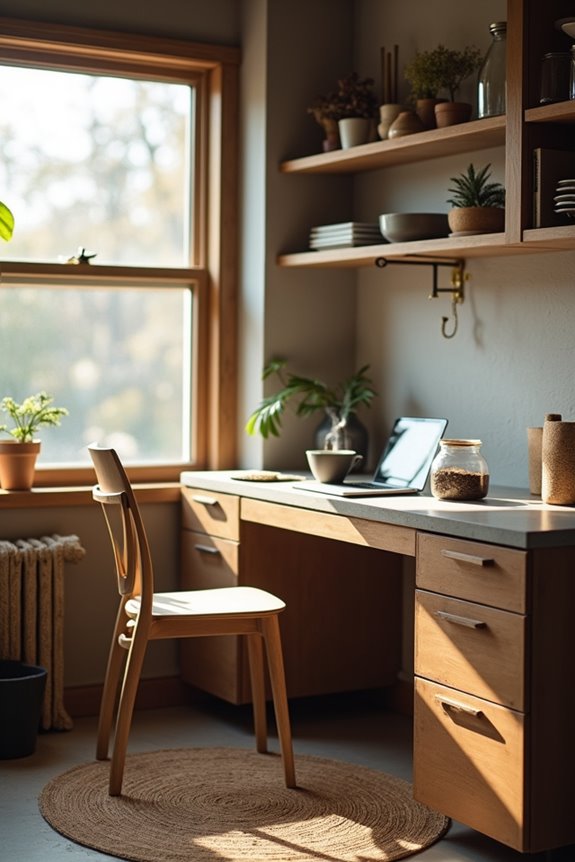
You’ve got your compact desk sorted, but here’s where the real placement matters: putting it in the right spot.
I’m talking about placing your desk near your coffee bar or daily-use zones. This setup improves how you work. You’ll grab your coffee, sit down, and knock out tasks without abandoning your kitchen’s flow. No more trekking across the room for quick work sessions.
| Location | Benefit | Result |
|---|---|---|
| Near Coffee Bar | Quick caffeine access | Uninterrupted workflow |
| Daily-Use Zones | Existing outlets & lighting | Better productivity |
| High-Traffic Areas | Tech hub setup | Easy device charging |
The advantage? You’re already there. Your desk becomes this natural stopping point where planning, writing, and laptop work happen without friction. You’ll feel connected to your space while staying productive. That’s the 2026 kitchen approach right there.
Add a Desk Without a Full Kitchen Renovation
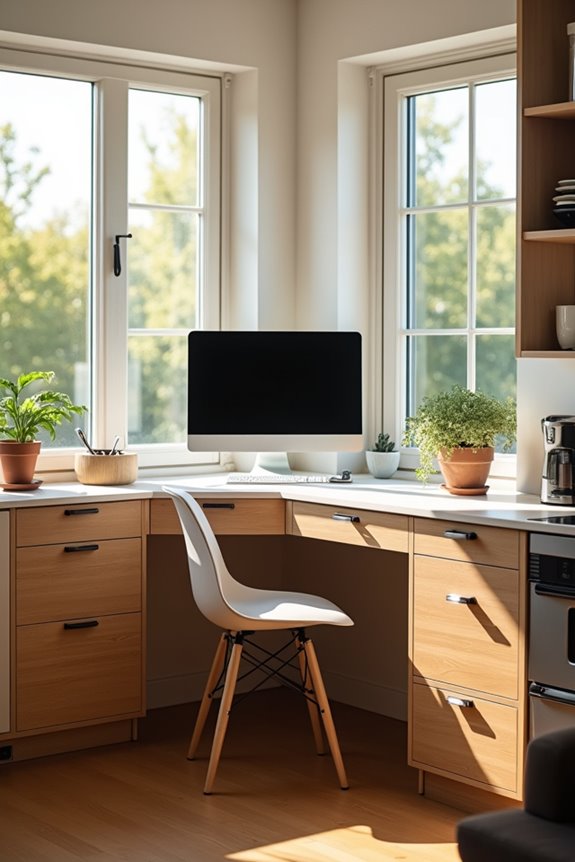
I’ve found that you don’t need to tear out your whole kitchen to make room for a desk—you can work with what you’ve already got. By reusing your existing cabinet boxes and swapping out surfaces, you’ll save money and time while maintaining your kitchen’s appearance. You can carve out a slim workspace using hidden storage and flat-panel doors that blend right in with your current style, turning dead space into a spot where you can pay bills, plan meals, or handle work emails.
Flexible Storage Solutions
Why tear out your entire kitchen when you can just add a desk and change how you work?
I’ve discovered that flexible storage solutions make this possible. Pull-out organizers slide smoothly into existing cabinets, holding spices and supplies exactly where I need them. Modular components let me rearrange things as my life changes—no contractor required.
A revolving corner tray maximizes that awkward space. Pull-out waste bins keep clutter hidden. I’m not demolishing anything; I’m upgrading what I’ve got.
This approach feels like a smarter way of living. I’m saving money. I’m respecting my home’s bones. And honestly? Customizing my space to fit my actual routine makes me feel seen and understood.
Minimal Installation Requirements
The best part about adding a kitchen desk? You don’t need a full renovation. I discovered I could build my space by repurposing cabinets I already had. Instead of ripping everything out, I added a compact work surface using my existing counter space in the corner near the window.
The minimal installation meant utilizing outlets already there and choosing modular components like pull-out organizers that fit smoothly. My kitchen desk came together in a weekend, not months. Repurposing cabinets kept costs down and waste minimal—exactly what I wanted.
This refresh-focused approach feels sustainable too. I’m reusing what I have, upgrading surfaces, and skipping the structural headache entirely. That’s why kitchen desks work now. They fit into real life without demanding everything change.
Adapting Existing Kitchen Layouts
Now here’s where it gets really practical. You don’t need to tear apart your kitchen to add a desk. I’ve seen people integrate a workspace directly into existing cabinetry or tuck one into a wall nook—no renovation required. This non-disruptive approach lets you preserve what you’ve got while gaining functionality.
The benefit? You’re utilizing current resources. A compact desk fits perfectly near your main workflow, giving you space for meal planning and bill sorting without interrupting cooking zones. Slim pull-out storage and soft-close drawers keep everything organized and hidden away.
This kind of smart kitchen layout adaptation addresses what most people want now—practical updates that don’t drain budgets or disrupt homes. Desk integration done right feels like it was always meant to be there.
Adjust Your Desk Function as Your Household’s Needs Change
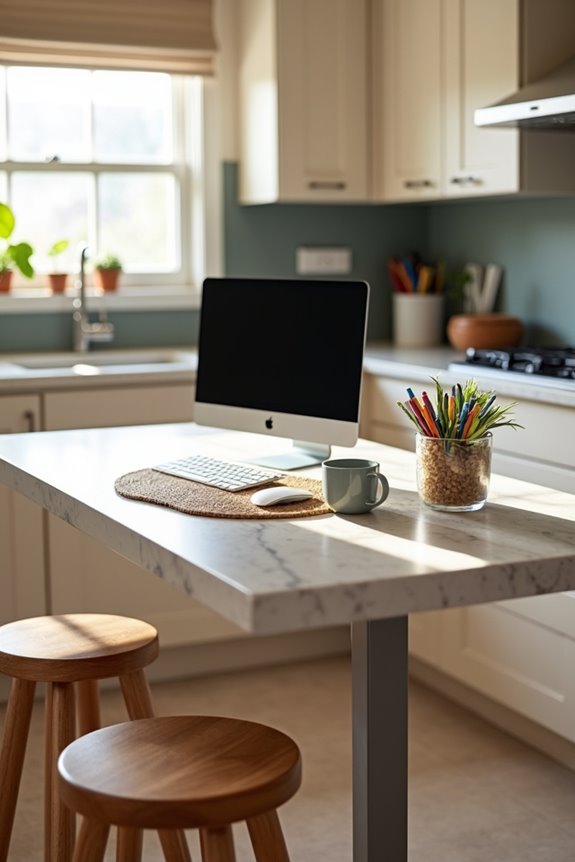
Life in your home doesn’t stay still for long—and your kitchen desk shouldn’t either. I’ve discovered that adjustable, modular desks adapt alongside my family’s evolving needs. When my daughter started remote learning, I simply repositioned my work surface and added shelving for her supplies. Now that she’s grown, I’ve removed those components and reconfigured everything for my blogging setup.
These multi-use desks are practical solutions. Pull-out organizers slide in when I’m managing household paperwork, then disappear when I need gaming space. Adjustable heights let me switch from sitting work to standing tasks without strain.
What makes this approach valuable isn’t just functionality—it’s knowing my desk grows with us. I’m not replacing furniture; I’m adapting it. That flexibility brings real peace of mind, especially when life throws curveballs.