

Your bedroom and bathroom don’t need to match perfectly—they need to work together. I’d focus on coordination instead of copying.
Pick a shared color palette, repeat your hardware finishes, and use consistent lighting across both spaces. This creates a unified feel without forcing identical looks.
A warm bedroom and serene bathroom can absolutely coexist when they speak the same design language. The details that tie everything together are what matter most.
Do Your Bedroom and Bathroom Actually Need to Match?
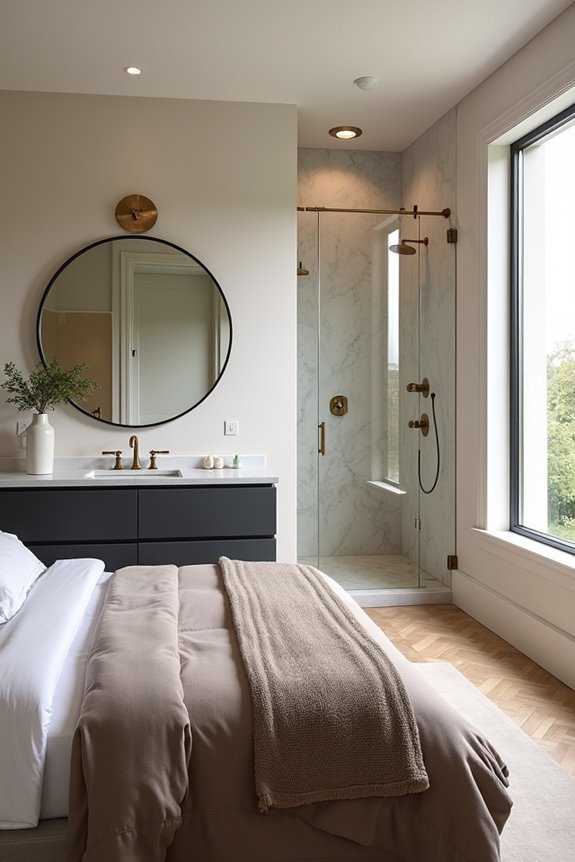
Ever felt that nagging pressure to make every room in your home look like it came from the same designer catalog? Here’s the truth: your bedroom and bathroom don’t need to match perfectly. What matters is cohesion—that feeling of intentional connection between spaces.
Think of it this way. You can create two distinct moods while maintaining harmony through shared elements. Maybe you’re drawn to a warm, spa-like bathroom but crave a bright, serene bedroom. That works well when you repeat a unifying color palette or coordinate hardware like brushed gold fixtures.
The key is stopping the urge to force sameness and instead building real connection. Shared finishes, consistent accent colors, and thoughtful details link your spaces naturally. You’re not creating an echo chamber; you’re creating a home that feels genuinely yours.
Why Coordinating Beats Copying
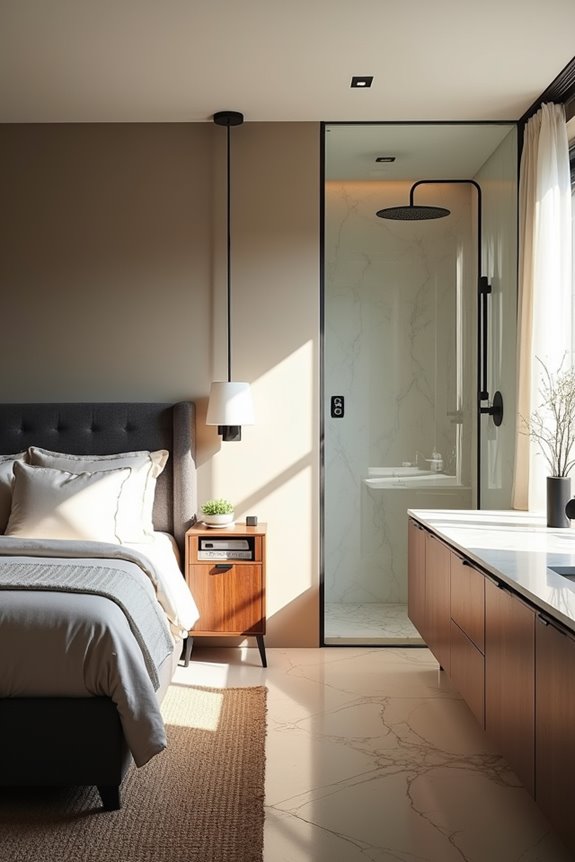
Now that you know matching isn’t the goal, let’s talk about what actually works: coordination.
Matching isn’t the goal—coordination is. Build cohesion through smart choices, not perfect copying.
I’ve found that coordinating creates a strong visual connection without feeling forced. You’re building cohesion through smart choices, not copying everything perfectly. Here’s what I do:
- Share your color palette across both rooms—think soft blues in your bedroom appearing as accent tiles in the bathroom
- Repeat hardware finishes like brushed gold or matte black on cabinet handles and light fixtures
- Use consistent materials such as wood textures or stone that appear in both spaces
- Echo design motifs through similar line shapes or style languages, whether modern or classic
This approach gives you balance. Each room keeps its own personality while feeling connected. You’re creating a unified style language that makes your home feel deliberate and thoughtfully designed—like spaces that genuinely belong together.
Five Matched Bedroom-and-Bathroom Styles That Work
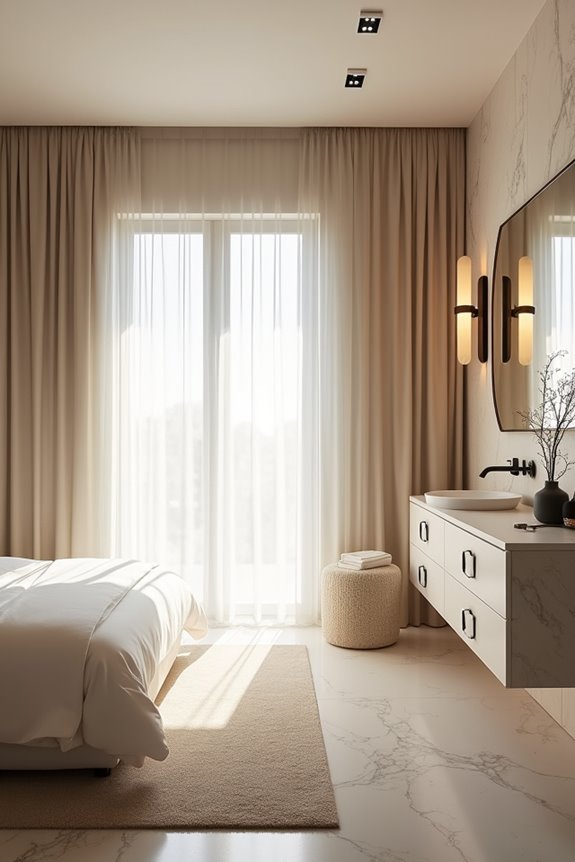
When you’re ready to tie your bedroom and bathroom together, I’ve found that picking one of five classic styles—Modern Coastal, Minimalist Luxe, Rustic Retreat, Organic Modern, or Scandinavian Calm—gives you a solid foundation to work from. Each style comes with its own color palette and design elements that naturally flow between rooms, so you’re not starting from scratch. Once you pick your direction, you can coordinate things like lighting fixtures and hardware to create those subtle connections that make everything feel deliberately designed rather than randomly assembled.
Coordinating Color Palettes
How do you create a bedroom and bathroom that feel like they belong together without making them look identical? Coordinating color palettes is your practical advantage. You don’t need matching everything—you need a unified look that whispers connection rather than shouts it.
Here’s what works:
- Use analogous colors from the color wheel for soft transitions between spaces
- Start with neutral bases like cream or gray to anchor both rooms
- Layer in blues (lighter in the bathroom, deeper in the bedroom) for calm continuity
- Repeat accents through hardware, tile, or textiles to reinforce your theme
This approach lets each room breathe while maintaining that satisfying sense of belonging. You’re creating deliberate spaces that feel thoughtfully connected—not forced.
Unified Design Elements
Once you’ve got your color palette working, the real magic happens when you pick a design style and commit to it across both rooms. I’ve found that repeating cohesive finishes—like brushed brass hardware or matching light fixtures—creates an invisible thread connecting your spaces. You’re not duplicating everything; you’re speaking the same design language.
Think about shared elements: the same frame style for mirrors, similar wood tones in vanities and nightstands, or identical tile textures. These soft neutrals and visual continuity make your bedroom and bathroom feel connected, not like separate afterthoughts.
When I matched my lighting styles and hardware across both rooms, suddenly everything felt deliberate and planned. That’s when you know unified design is working. Your spaces communicate with each other instead of competing for attention.
Color Harmony: Using Analogous Palettes to Tie Spaces Together
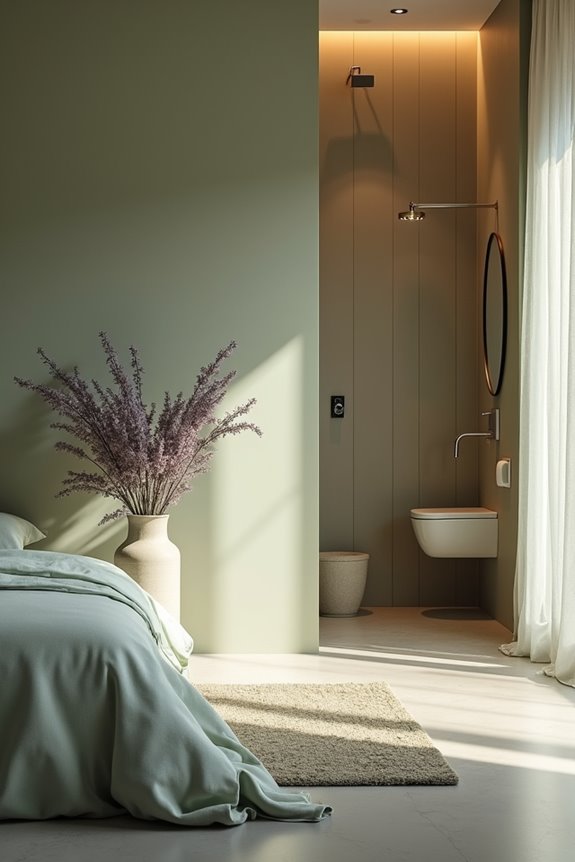
Why do some bedrooms and bathrooms feel like they belong together, while others clash despite being just steps apart? The answer lies in color harmony. Analogous palettes—colors sitting next to each other on the color wheel—create cohesion that ties spaces together.
Analogous palettes create cohesion between adjacent rooms by using neighboring hues that blend softly without visual conflict.
Here’s what makes analogous palettes work:
- They blend softly without identical hues, maintaining distinct identities
- They prevent visual conflict between rooms naturally
- They extend across walls, textiles, and accessories seamlessly
- They avoid opposite colors that distract and disturb calm
When I used neighboring hues in my primary suite, everything felt purposeful. My soft blue bedroom transitions smoothly into the bathroom’s blue-green walls. These transitional colors create connected spaces with clear design direction rather than appearing random. The rooms work as one cohesive unit.
Material and Texture: Subtle Connections That Work Across Rooms
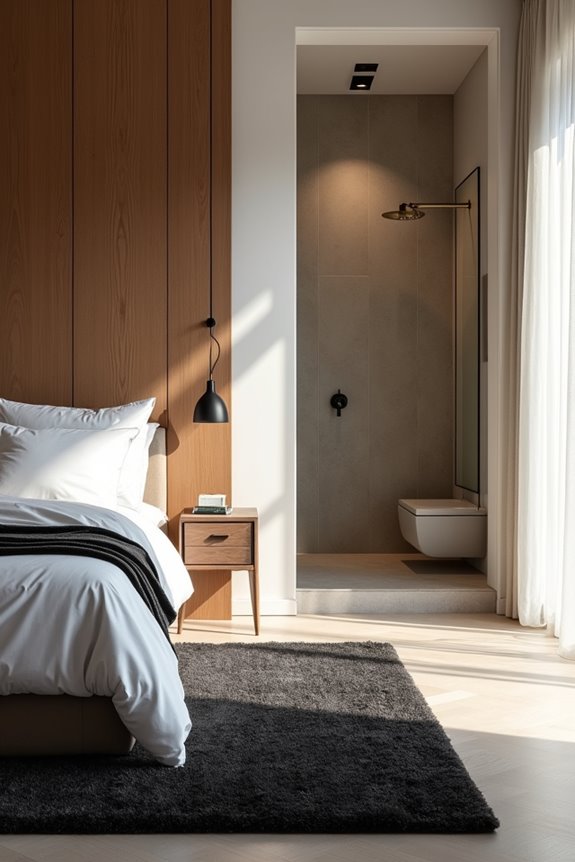
Color’s just the beginning, though—what really makes a bedroom and bathroom feel like they’re meant for each other is what you can actually touch. I’ve learned that repeating wood tones and textures creates that cohesive palette you’re searching for without feeling forced. A matte stone tile in your bath paired with textured wood flooring in your bedroom? That’s harmony. The same brushed brass hardware or chrome finishes across both spaces reinforce unity quietly. You’re not copying—you’re answering. Natural linen textiles with leather accents bridge these intimate rooms while letting each keep its own personality. Balance matters too. Match your materials’ scale: large slabs in both spaces or small accent pieces. That’s how you build spaces that truly belong together.
Lighting and Fixtures: Coordinators That Connect Both Spaces
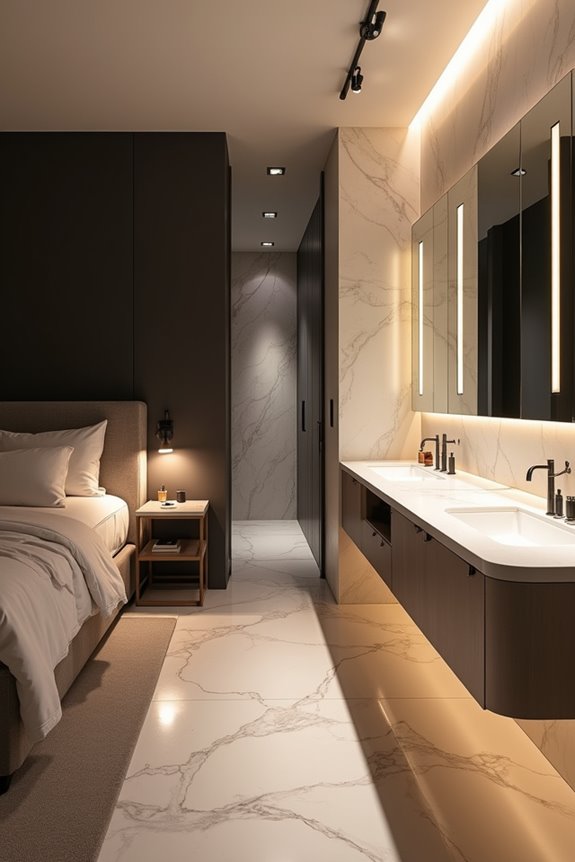
How’d I finally crack the code to making my bedroom and bathroom feel like they actually belong together? Lighting and fixtures. They’re the connectors.
Here’s what changed everything for me:
- Matching hardware finishes (I chose brushed gold) on both vanities and bedroom lamps created cohesion
- Consistent color temperature at 2700K made everything feel warm and deliberate, not random
- Repeating fixture styles tied the spaces together—my pendant light echoes the bedroom ceiling fixture
- Layered lighting zones in both rooms balanced function with unified mood
When I coordinated these elements, something clicked. My bathroom didn’t feel like an afterthought anymore. The fixtures became conversation starters between rooms, pulling my whole suite together. That’s when belonging stopped being wishful thinking and became real.
Coordination Mistakes That Clash (and How to Avoid Them)
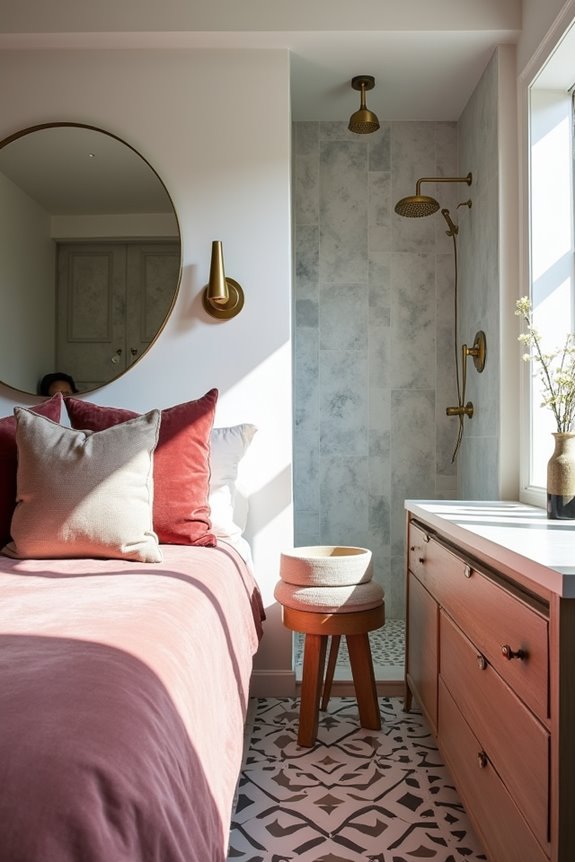
When I first tried matching my bedroom and bathroom, I made almost every mistake in the book. I bought identical brass handles for both rooms, thinking cohesion meant sameness. Wrong. My spaces felt stiff, not connected.
Then I realized my real problem: I’d ignored scale and proportion. That oversized mirror I hung above my bathroom sink? It clashed with my bedroom’s furniture arrangement. The lighting contrast was poor too—I’d installed the same warm bulbs everywhere, removing the mood differences each room needed.
Here’s what worked. I kept my hardware theme consistent without duplicating exact pieces. I adjusted lighting temperatures. And I finally considered how furniture sizes actually worked in each space.
That’s when my bedroom and bathroom started feeling like they belonged together.
Create Visual Separation Without Breaking Harmony
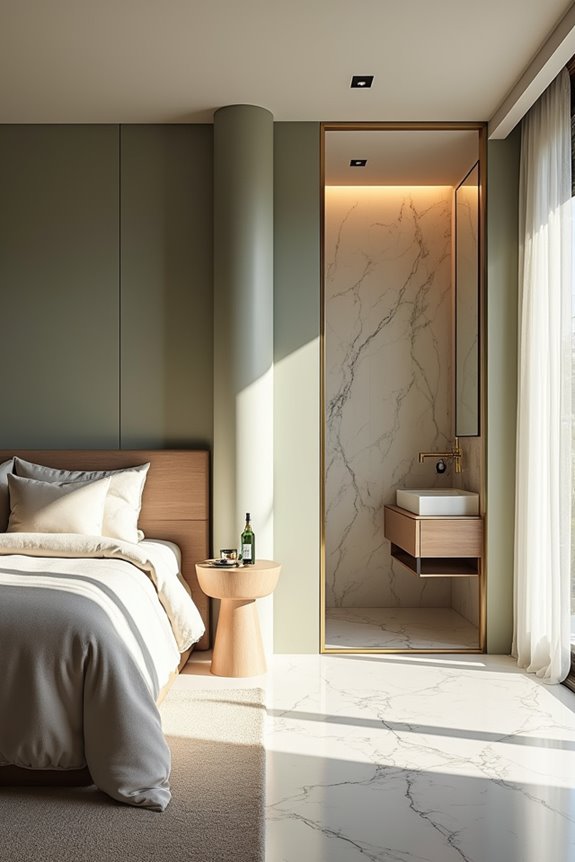
So here’s what I learned: you don’t need your bedroom and bathroom to look identical to feel connected.
You don’t need identical spaces to feel connected—harmony comes through shared undertones and thoughtful design choices.
I discovered that a neutral base in both spaces creates the perfect foundation. From there, you can branch out while keeping things cohesive through shared undertones. Here’s my approach:
- Use distinct color palettes—warm bedroom tones paired with cool bathroom vibes
- Repeat design elements like hardware finishes or textures across both rooms
- Vary lighting and furniture scale to reinforce visual separation
- Choose coordinating focal points that reflect each room’s purpose
This strategy gives me the visual separation I wanted without sacrificing harmony. My bedroom feels like a quiet retreat, while my bathroom has that spa-like calm. Yet they’re clearly part of the same home. That balance is exactly where I wanted to be.
Gold Accents Unite Warm and Serene Suites
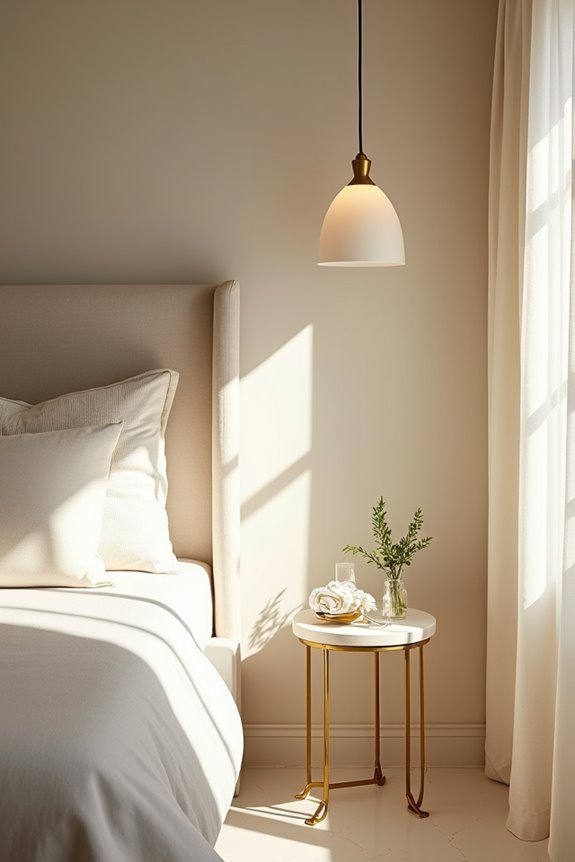
What if the secret to connecting two totally different rooms was as simple as choosing the right metal finish?
I’ve found that gold accents create a unified design between my warm bedroom and serene bathroom without them looking identical. Gold acts as a unifying motif—it’s like a quiet thread running through both spaces. In my bedroom, I paired gold lighting with warm wood furniture. In the bathroom, I added gold-framed mirrors against spa-like whites.
Consistency matters when you repeat that same metallic tone strategically. My brass faucet matches the lamp bases upstairs. This approach keeps each room feeling distinct while maintaining that connected, luxurious feeling I wanted.
You’re not forcing rooms to match. You’re simply speaking the same design language.
Build Cohesion on a Budget
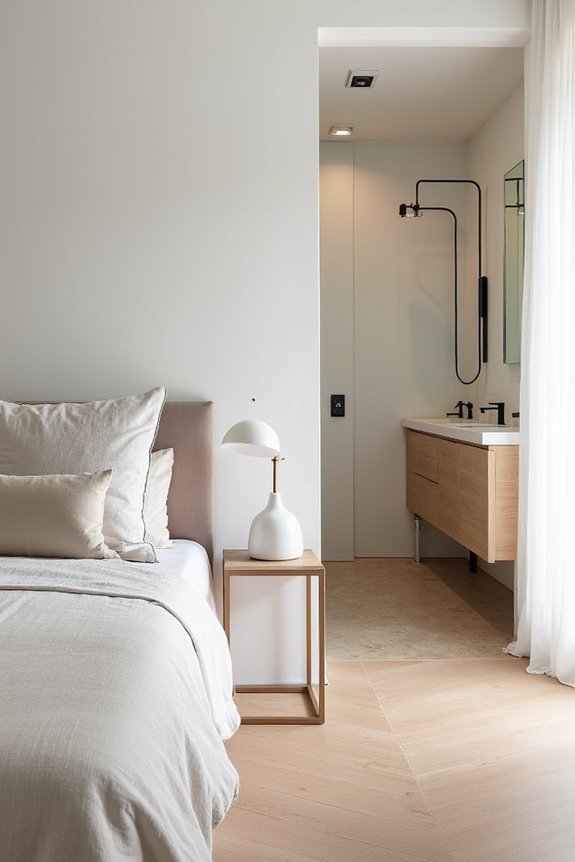
You don’t need to spend a fortune to make your bedroom and bathroom feel connected. I’ve discovered simple ways to build cohesion on a modest budget.
Start by choosing a shared color palette—maybe soft blues or warm neutrals. This ties everything together right away. Next, consider these budget-friendly strategies:
- Repeat materials like matching wood finishes on shelves and vanities
- Coordinate lighting fixtures in brushed brass or matte black
- Use textiles such as towels and throw pillows in the same hue family
- Pick a common design theme like Modern Coastal or Scandinavian Calm
These tweaks create that unified feeling you’re after. You’re not duplicating expensive decor—you’re being thoughtful about your choices. Small echoes between rooms feel purposeful and personal, making your spaces truly your own at a reasonable cost.
Rules to Break: Bold Mismatches That Strengthen a Suite
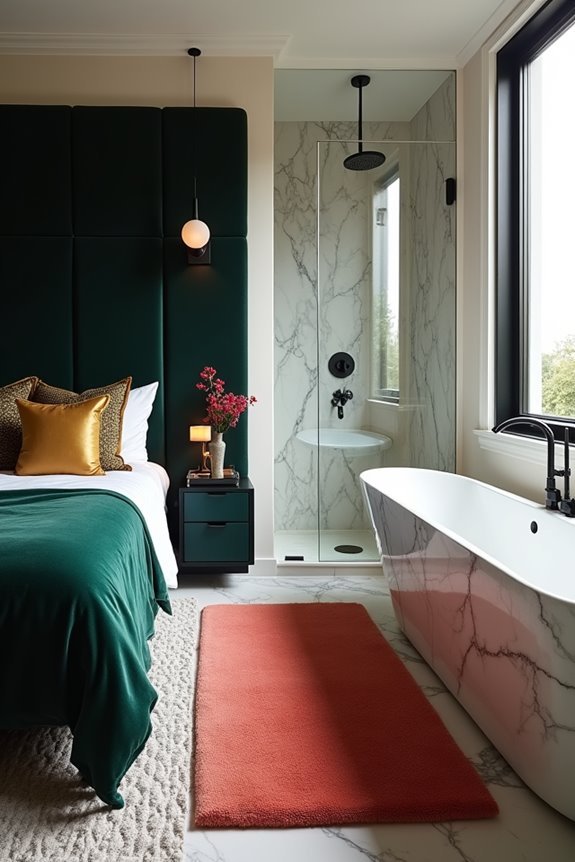
Why does matching everything feel so predictable? I’ve discovered that bold mismatches actually strengthen your suite when you’re intentional about it. You can use completely different color palettes in your bedroom and bathroom—say, warm terracotta tones in one and cool blues in the other—while keeping cohesive elements like brushed brass hardware or soft linen textures that connect them together.
Think of it this way: echo undertones rather than duplicating furniture. I paired my dark, moody bedroom with a brighter, spa-like bathroom, and suddenly each space had its own character. The unifying texture of similar lighting styles created that connected feeling I wanted without feeling matchy-matchy.
That’s what belonging looks like in design—spaces that are yours by design, not generic copies.
Coordination Checklist: Five Decisions to Make Now
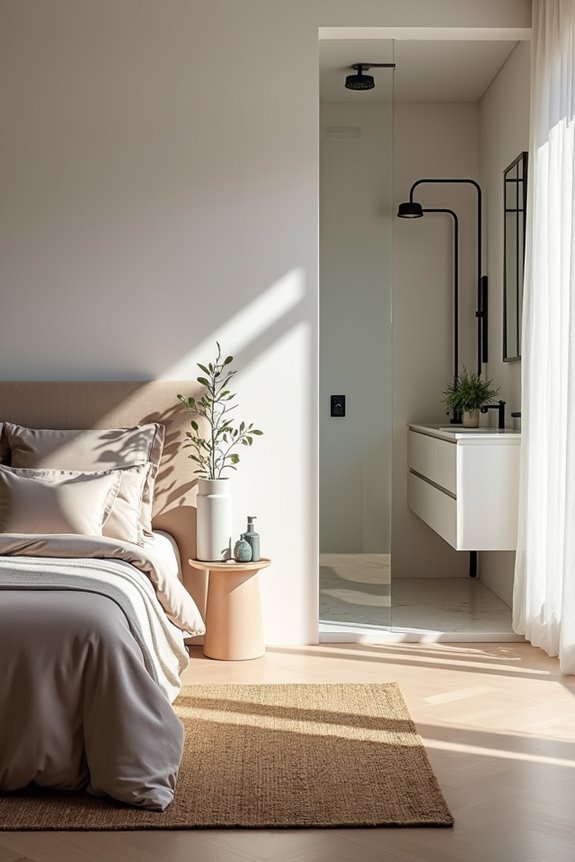
Now that you’re ready to move beyond the cookie-cutter approach, here’s where the real work happens—and honestly, it’s the fun part. I want you to pause and think through these key decisions:
Now that you’re ready to move beyond the cookie-cutter approach, here’s where the real work happens—and honestly, it’s the fun part.
- Pick your shared colors. Choose 2–3 accent colors that’ll appear in both rooms. Maybe soft sage or warm terracotta.
- Select consistent textures. Cotton, wood, or linen? These materials create cohesion when repeated.
- Decide on a style language. Modern, classic, or eclectic? This unifies everything.
- Define each room’s mood. Your bedroom stays calm; your bathroom feels spa-like.
These choices aren’t permanent. You’re building a foundation that works well together, not forced. Your suite becomes a place where you genuinely belong.