Tracing bohemian style back reveals a fascinating journey starting in 19th-century Paris, where artists rebelled against rigid Victorian fashion with flowing robes and worn fabrics. The term itself comes from a mistaken link to Roma travelers, though the movement grew distinctly French—shaped by independent women and artists valuing authenticity over wealth.
From Pre-Raphaelites rejecting corsets to hippies embracing folk layers, bohemian style kept evolving while staying true to its core: creative self-expression through repurposed, handmade pieces. The fuller story of how designers incorporated this spirit into modern runways continues ahead.
Defining Bohemian Style: Philosophy, Freedom, and Creativity
When you think about bohemian style, you’re really thinking about a way of life that’s all about breaking free—free from stuffy rules, free from the pressure to own a bunch of stuff you don’t need, and free to express yourself however feels right. Bohemianism is more than just fashion. It’s a philosophy rooted in creativity and anti-conformity. This movement celebrates your individuality and encourages you to reject what society says you should be. The nomadic lifestyle of 19th-century artists shaped these values. They lived simply, prioritizing artistic expression over material wealth. They wore what they had, mixing and matching fabrics freely. Today, that same spirit lives in how we dress and live. It’s about belonging to something bigger—a community that values authentic self-expression above all else.
Why “Bohemian” Stuck: A Mistaken Identity With the Roma
The word “Bohemian” doesn’t actually come from Bohemia or the Roma people, even though everyone assumes it does. When 19th-century Parisians saw unconventional artists and writers living freely for their art, they mistakenly linked them to Roma travelers they thought came from Bohemia—a total mix-up that persisted for centuries. What started as a wrong guess about geography and culture became the label for a whole creative movement that had nothing to do with either place or people.
The Bohemia Misconception
Why’d we end up calling free-spirited artists and unconventional thinkers “Bohemians” when they had nothing to do with Bohemia? Here’s the thing: it all started with a mix-up. People mistakenly thought Romani travelers came from Bohemia, so when nonconforming artists emerged in 19th-century Paris, that name just stuck. These rebels against mainstream society—writers, painters, musicians—embraced the label without realizing its Romani stereotype roots. The Bohemianism misattribution spread fast. What we called the Bohemia misconception became the identity for anyone rejecting society’s rules. The truth? These artists weren’t nomadic because of heritage; they were poor and chose creativity over conformity. Understanding this distinction matters because boho fashion today often borrows aesthetics while erasing the actual Romani people behind the misnamed label.
Roma Culture And Fashion
So here’s where the confusion really took root: back in the 1800s, people saw Romani travelers moving through Europe and made a big assumption. They thought these wanderers came from Bohemia, a region in Central Europe. That mistake stuck around for centuries.
Here’s the thing—that misassociation created this romantic image of Bohemianism as nomadic and artistic. People linked flowing fabrics and unconventional fashion history directly to Romani culture. But that connection wasn’t real. Romani people have their own distinct origins, traditions, and fashion that’s completely separate from Bohemian style.
Yet this confusion shaped how we understand Bohemianism today. The blend of misunderstood Romani influences and actual Paris artist culture created something new. Understanding this origins story helps us recognize both Bohemianism and Romani culture for what they actually are.
Term Evolution Through History
The word “Bohemian” itself tells us something about how mistakes can reshape language and culture. Here’s what I’ve discovered: in late 18th-century France, artists rejected formal rules and embraced creative freedom—they called themselves “Bohémien.” But here’s the twist. People mistakenly believed the Romani people originated from Bohemia, Czech Republic. That misassociation stuck around hard.
French Bohemians Birth Artistic Rebellion (Early 19th Century)
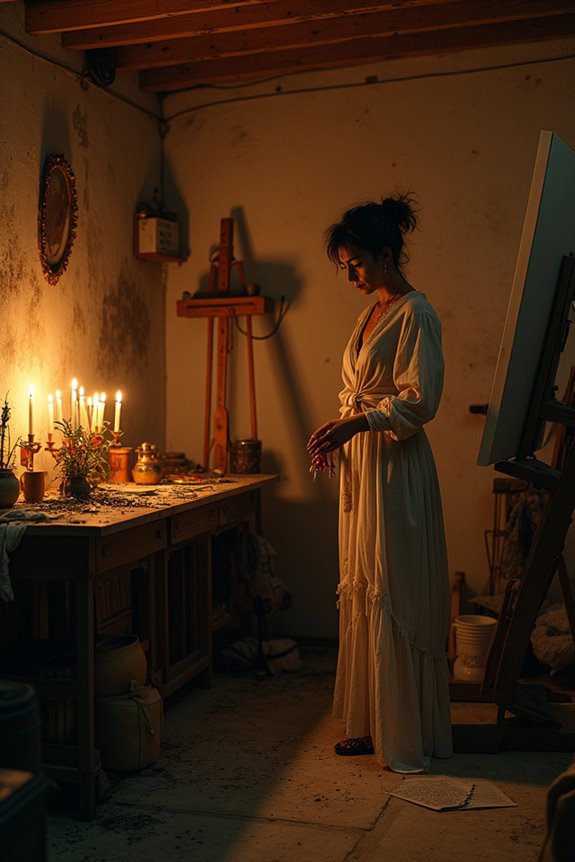
In early 1800s France, a word started circulating through artistic circles that’d eventually reshape how we think about style and rebellion: *Bohémien*.
French bohemians embraced an unconventional lifestyle that rejected stuffy society rules. They wore flowing robes and weathered fabrics—clothes that looked lived-in and real. This wasn’t about looking rich; it was about expressing who they truly were.
Writers like Victor Hugo and Honoré de Balzac brought bohemian culture into the spotlight through their novels, making the artistic rebellion feel thrilling and desirable. Bohemian fashion drew inspiration from nomadic and gypsy traditions, featuring repurposed materials and handmade details that showed individuality.
For these early 19th century artists, clothing became their declaration of independence. They chose authenticity over appearances, creativity over conformity. This movement planted seeds for everything that’d follow.
The Grisette Silhouette: How Women’s Fashion Defined Bohemia
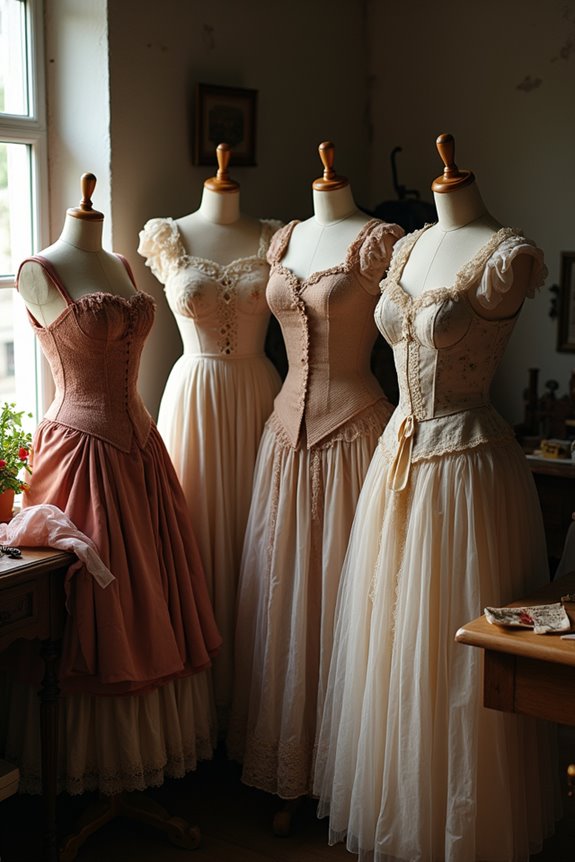
While French bohemian men grabbed headlines with their artistic declarations, women were quietly reshaping what bohemian style actually looked like—and what it meant. The Grisette—that independent young seamstress or milliner assistant—became the living embodiment of Bohemian aesthetics. She didn’t follow fashion rules; she created them. Working in 19th-century Paris, these women crafted a fashion silhouette that blended practicality with artistic flair. Their modest dresses, often self-made, expressed rebellion through simple elegance. The Grisette silhouette wasn’t about expensive fabrics or status symbols. It was about authenticity. Through her choices, this woman shaped how we still see Bohemian style today—as something real, accessible, and unapologetically independent.
The Pre-Raphaelites Reshape the Bohemian Aesthetic
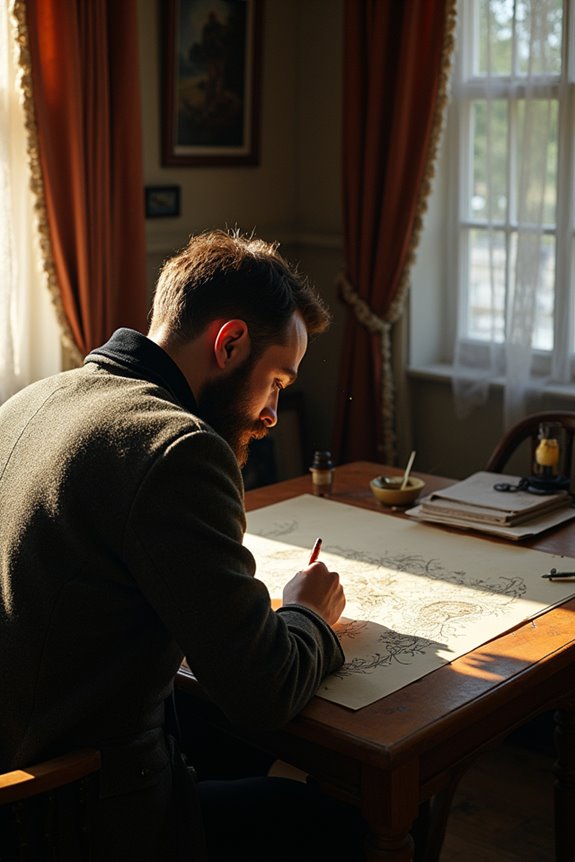
When Dante Gabriel Rossetti and his circle rejected the stiff corsets and industrial uniformity of Victorian fashion, they didn’t just create art—they rewrote what it meant to be Bohemian, trading the grisette’s practical simplicity for flowing silhouettes and nature-inspired details that whispered rebellion. Jane Morris became the living embodiment of this shift, wearing those loose, romantic dresses with floral embroidery that’d later inspire generations to imagine Bohemia as something ethereal and deeply creative rather than simply poor and unconventional. Their meticulous attention to beauty in every detail—from cascading fabrics to hand-embroidered flowers—gave Bohemian style a visual language that remains instantly recognizable today, proving that sometimes the most powerful act of nonconformity is making something genuinely, undeniably beautiful.
Rossetti’s Bohemian Rebellion
How did one artist manage to completely flip the script on what Victorian fashion and society expected?
Rossetti did it. This Pre-Raphaelite painter didn’t just paint rebellion—he wore it. I’m talking about flowing dress, elaborate details, and zero apologies for looking different. He sparked an artistic rebellion that made fashion feel like a creative statement instead of a stuffy requirement.
Here’s what Rossetti actually changed:
- Promoted unrestricted, flowing garments that rejected tight corsets
- Modeled elaborate, artful details that inspired peers like Jane Morris
- Merged poetry, painting, and fashion into one bohemian identity
- Championed natural fabrics and romantic florals as serious artistic choices
His influence rippled through the entire Pre-Raphaelite circle. When Rossetti chose flowing dress and ornate embellishments, he wasn’t just being eccentric—he was giving bohemianism its voice. That’s powerful.
Jane Morris’ Fashion Influence
If Rossetti gave bohemianism its voice, then Jane Morris gave it a face—and a body that moved differently through the world. She wore flowing gowns that rejected the tight corsets other women endured. Her Grecian-inspired drapery and soft fabrics told a story: you don’t need to squeeze yourself into society’s mold. Jane’s layered, airy garments and nature-inspired motifs became the blueprint for boho-chic style we recognize today. Her pale complexion and intricate detailing in lace and wraps influenced how women imagined beauty itself. She reshaped bohemian style by proving that expressive, non-restrictive dress wasn’t just fashion—it was rebellion. That’s a significant shift in how people understood clothing and identity.
Pre-Raphaelite Aesthetic Legacy
Why’d the Pre-Raphaelites matter so much to bohemian style? They basically rewrote fashion’s rulebook. These artists rejected industrial-age constraints and created something genuinely liberating.
Here’s what made their aesthetic legacy endure:
- Flowing dresses replaced restrictive corsets, giving you actual movement and comfort
- Floral prints became the visual language of bohemianism, celebrating nature’s beauty
- Ornate textiles and natural fabrics replaced mass-produced materials with authenticity
- Artistic integrity linked unconventional fashion directly to creative expression
The Pre-Raphaelite circle—especially through figures like Jane Morris—showed us that clothes could tell a story about who you really are. They didn’t just wear flowing dresses; they wore rebellion. That connection between art and fashion? It never disappeared. It evolved into the boho movement we recognize today, proving that some aesthetic choices persist because they’re rooted in real values.
The Aesthetic Movement Breaks Victorian Molds
As the Victorian era’s strict rules about how people should dress and decorate their homes started feeling suffocating to artists and free thinkers, something shifted in the late 1800s. The Aesthetic movement emerged as a rebellious answer to all that rigidity. I’d describe it as pure creative freedom—nonconformist designers rejected tight corsets and stiff silhouettes for flowing garments that actually let you breathe and move. They embraced art-for-art’s-sake philosophy, filling spaces with handcrafted embellishments, exotic patterns, and oriental influences. It wasn’t just fashion; it was a complete lifestyle shift. These visionaries decorated homes with intricate embroidery and natural motifs. Their bold choices redefined what beauty could mean, paving the way for bohemian culture’s free-spirited values we recognize today.
Beatniks Bring Bohemian Style to 1950s America
How’d a bunch of poets and jazz lovers in 1950s coffeeshops end up completely reshaping what bohemian style meant? They ditched the ornate Victorian stuff and created something new—minimalist, stripped-down, and undeniably cool.
Here’s what made Beatnik fashion so powerful:
- Black turtlenecks and berets became their uniform of non-conformity
- Dark sunglasses shielded their introspective souls from mainstream culture
- Simple moccasins and loafers replaced fancy footwear entirely
- Unadorned fabrics rejected society’s obsession with decoration
Allen Ginsberg and Jack Kerouac didn’t just write poetry—they embodied intellectual chic through their wardrobes. Their coffeehouse gatherings brought bohemian ideals from distant European concepts into something real, accessible, and American. They proved you didn’t need elaborate clothing to rebel. You needed intention. You needed authenticity. That’s what connected with people like us.
Hippie Counterculture Amplifies Bohemian Dress (1960s–1970s)
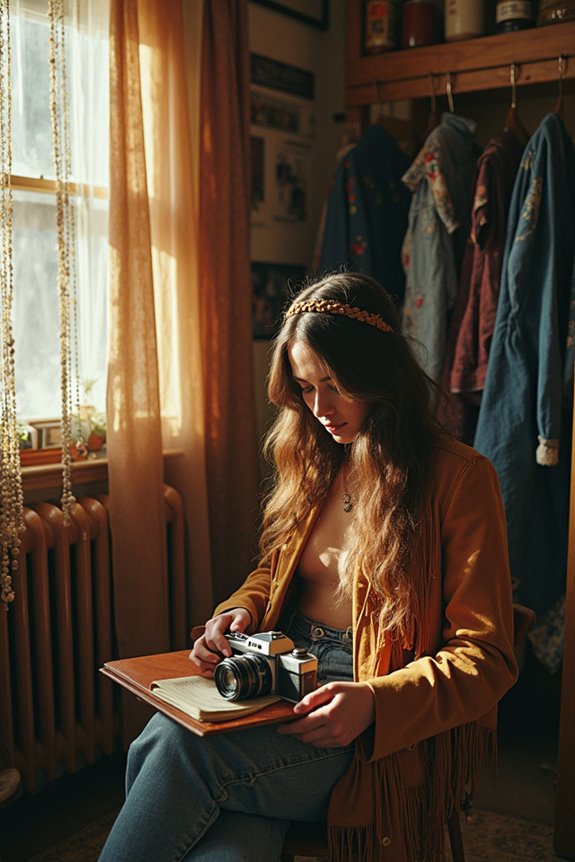
The 1960s brought a significant shift in what bohemian style could be. The hippie counterculture fundamentally changed bohemian dress into something radical and unapologetic. Young people rejected their parents’ expectations by wearing flowing fabrics, folk-inspired layers, and fringe jackets—pieces that expressed freedom. Festival fashion became the primary expression of this movement. At Woodstock and similar gatherings, you’d see floral maxi dresses, peasant blouses, and wide-brimmed hats everywhere. These weren’t just clothes; they were statements. Colorful embroidery and handmade accessories showed that conformity wasn’t your thing. The counterculture’s emphasis on peace and love meant bohemian style wasn’t superficial—it reflected genuine values. This era established boho’s connection to nonconformity, shaping everything that came after.
When Designers Made Bohemian Chic a Runway Staple (1980s–2000s)
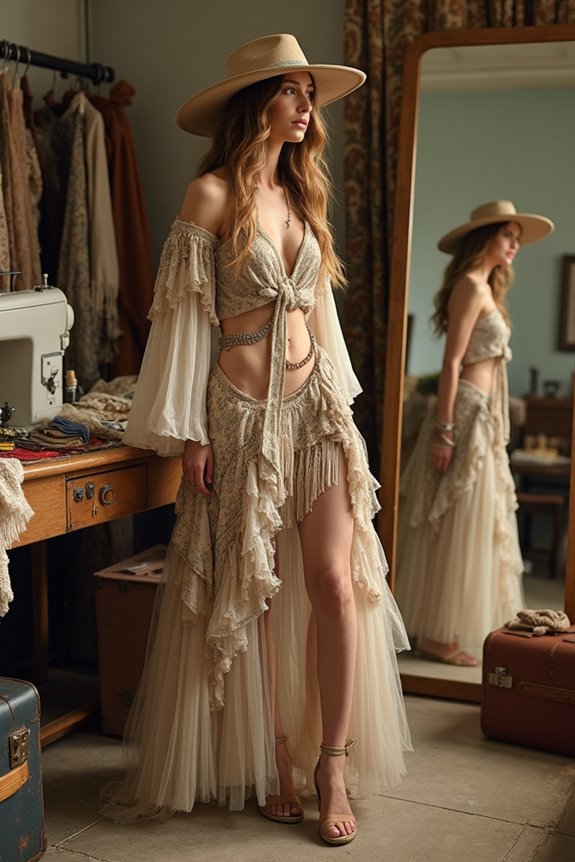
By the 1980s, bohemian style had shed its counterculture badge and found a new home on high-fashion runways. I watched as designers like Yves Saint Laurent and John Galliano brought boho from rebellion into luxury. They blended folk-inspired motifs with polished tailoring, making the style accessible to everyone.
By the 1980s, bohemian style transformed from counterculture rebellion into luxury fashion on high-fashion runways worldwide.
Throughout this era, here’s what made boho chic work:
- Flowing silhouettes that moved with grace and freedom
- Eclectic prints mixing patterns and colors boldly
- Vintage textures like macramé and fringe details
- Layered jewelry and embroidered accents
Modern Bohemian: How Designers Reinterpret the Legacy Today
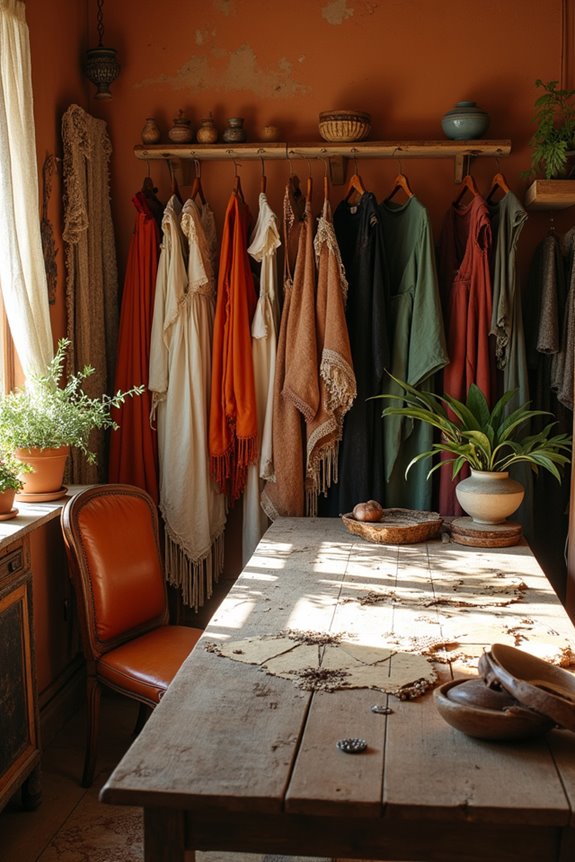
I’ve watched how today’s designers take that boho spirit and make it feel fresh for our lives right now—Chloé softens those ’70s folkwear shapes with polished tailoring, while Valentino and Ralph Lauren keep evolving their silhouettes to honor the past without getting stuck in it. What strikes me most is how they’re blending runway design with real-world wearability: you’ll see ruffled chiffon dresses and fringe jackets paired with ballet flats, making bohemian feel approachable rather than costume-y. They’re also weaving in artisanal touches like macramé and embroidery across both luxury and mass-market pieces, so whether you’re shopping high-end or hitting your local retailer, you can capture that free-spirited vibe in a genuine way.
Evolution Through High Fashion
While bohemian style started as a grassroots rebellion against mainstream fashion, designers in the 1960s and 1970s recognized its commercial and aesthetic potential on the runway. The evolution of boho into luxury fashion is worth examining:
- John Thea Porter, Yves Saint Laurent, and Karl Lagerfeld incorporated folk motifs into couture collections
- Vogue’s January 1970 issue established the bohemian aesthetic with flowing silhouettes and dreamlike proportions
- The 1990s merged boho with grunge through Tom Ford’s Gucci and Isabel Marant’s layered designs
- Contemporary houses like Valentino now reinterpret boho using lighter fabrics and artisanal details like macramé
What’s particularly interesting is how flowing silhouettes and fringe—once countercultural symbols—became high-fashion staples. Designers didn’t simply copy boho; they reinterpreted it. They integrated folk traditions into refined pieces that balance rebellious spirit with elegance. This process of adaptation demonstrates how subversive aesthetics can be absorbed into established luxury markets while retaining their visual identity.
Contemporary Designer Reinterpretations
How do today’s fashion designers keep bohemian style alive without making it feel like a museum piece? They’re blending vintage boho-chic with sleek modern tailoring in ways that feel fresh and wearable. Designers like Stella McCartney layer textures—mixing macramé with chiffon, tassels with clean lines. It’s a contemporary reinterpretation that honors the past while speaking to now.
What’s particularly interesting is how global influences shape these collections. Valentino pairs ruffled dresses with playful accessories. Ralph Lauren weaves embroidery into structured pieces. The accessories matter too: artisanal jewelry, embroidered tote bags, crochet boots. These details ground boho in reality—pieces you’d actually wear, not just admire. Today’s designers understand that bohemian style thrives when it moves with you, feeling natural and authentic.
Build Your Bohemian Look: Essential Fabrics, Colors, and Silhouettes
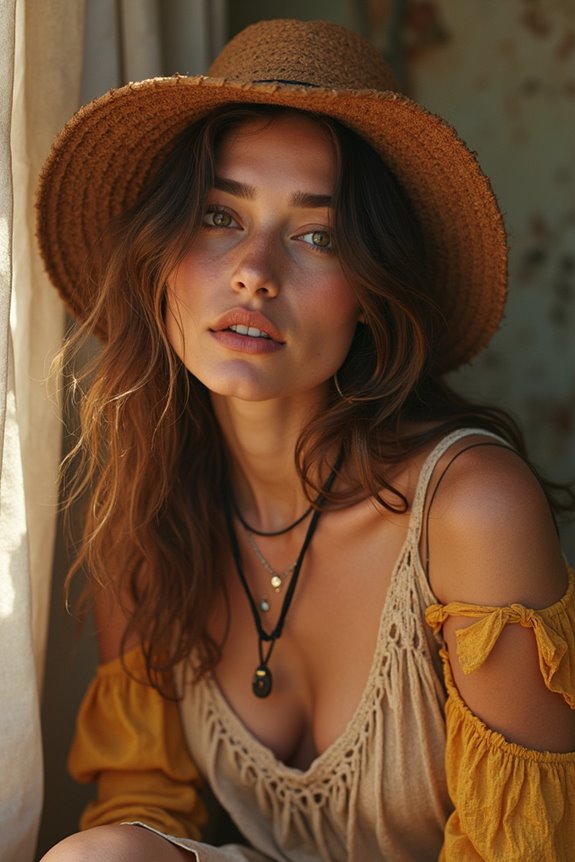
What makes that effortless boho vibe work? It comes down to understanding bohemian origins and choosing pieces that feel authentic to you.
Here’s what I focus on:
- Natural fabrics – Cotton, linen, and viscose let your skin breathe and move freely
- Flowing silhouettes – Loose cuts and layered pieces create that relaxed, artistic feel
- Earthy color palette – Terracotta, sage, cream, and rust ground your look in nature
- Boho accessories – Macramé, embroidery, and handmade details tell your story
When I build my bohemian look, I’m honoring that 19th-century spirit of repurposing and creating something uniquely mine. You’re not just wearing clothes—you’re expressing who you are. That’s what bohemian style is really about.