
Yes, bathroom doors are typically narrower than standard interior doors. While most interior doors measure around 30 inches wide, bathroom doors often come in at 28 inches or smaller due to tight spaces and plumbing layouts. You’ll find standard bathroom widths ranging from 24 to 34 inches, whereas living areas commonly use 32 to 36-inch doors. The difference comes down to space constraints—bathrooms simply have less room than other areas. Multiple sizing options are available depending on your specific needs and layout.
How Standard Interior Doors Compare to Bathroom Doors
Ever wonder why your bathroom door feels snugger than your bedroom door?
Ever wonder why your bathroom door feels snugger than your bedroom door? There’s actually a good reason.
I’ve noticed this too, and there’s actually a good reason. Standard interior doors typically measure 30 inches wide, but bathroom doors often run narrower—sometimes just 28 inches. It’s not a mistake; it’s intentional planning.
Here’s what I’ve learned: bathrooms are usually smaller spaces, so builders choose compact door widths to save room. However, for accessibility, many modern bathrooms use 34-inch doors to achieve a 32-inch clear opening that meets ADA standards. This balance matters when planning your rough opening and door swing.
The real difference? Your bedroom door prioritizes openness, while your bathroom door adapts to tight spaces and moisture concerns. Both serve their purpose well.
Why Bathroom Doors Are Often Narrower: Space, Plumbing, and Layout
Why do bathrooms seem to demand narrower doors than the rest of your home? It’s simple: plumbing layout and space constraints force your hand. Vanities, toilets, and pipes eat up real estate fast. When you’re remodeling or working with tight quarters, a standard 36-inch door won’t fit without major repositioning—and that costs money you’d rather spend elsewhere.
That’s where creative solutions come in. Pocket doors slide into walls, saving swing space. Bypass doors work too. Even 28-inch bathroom door width handles daily use just fine for most people.
But here’s the thing: accessibility clearance matters. Building codes suggest 32-inch clear openings for aging-in-place considerations. Smart designers balance narrow doors against future needs, choosing wider options when remodeling constraints allow. It’s about finding what works for your space today while thinking ahead.
Door Sizes for Each Room Type: 24, 28, 32, and 34 Inches Explained
When you’re standing in front of a doorway, you probably don’t think much about those numbers printed on the frame—but they matter more than you’d expect. Here’s the thing: bathroom doors typically range from 24 to 34 inches wide, while standard interior doors hover around 30 inches. That 24-inch option? It’s tight and outdated. Most bathrooms use 28 or 32-inch doors for comfortable passage. But here’s where it gets interesting. If you’re thinking about aging-in-place or want better accessibility, you’ll want that 32 or 34-inch door. The 34-inch option provides a true clear opening that meets ADA accessibility standards. Door height stays consistent at 80 inches everywhere. Understanding these sizes helps you make choices that work for your home’s future, not just today.
ADA and Code Requirements: When Wider Bathroom Doors Matter
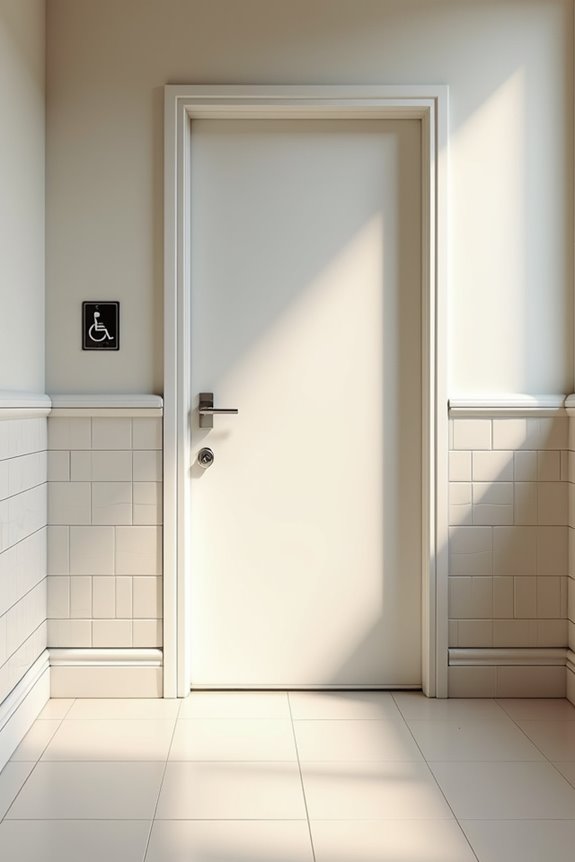
If you’re renovating or building and want your bathroom to work for everyone—not just today, but down the road—door width matters more than you might think. The ADA and NKBA guidelines recommend a minimum 32-inch clear opening, which typically requires a 34 or 36-inch door to account for hinges and hardware. Most code requirements, including the IRC, don’t specify one universal width, but accessibility standards push toward wider doors. Here’s why: a 36-inch door reliably delivers that essential 32-inch clear width wheelchairs need. When you install wide bathroom doors now, you’re future-proofing your home. You’re also boosting resale value and making your space welcoming for guests. It’s a small choice that demonstrates thoughtful design.
Space-Saving Door Options When Standard Widths Don’t Fit
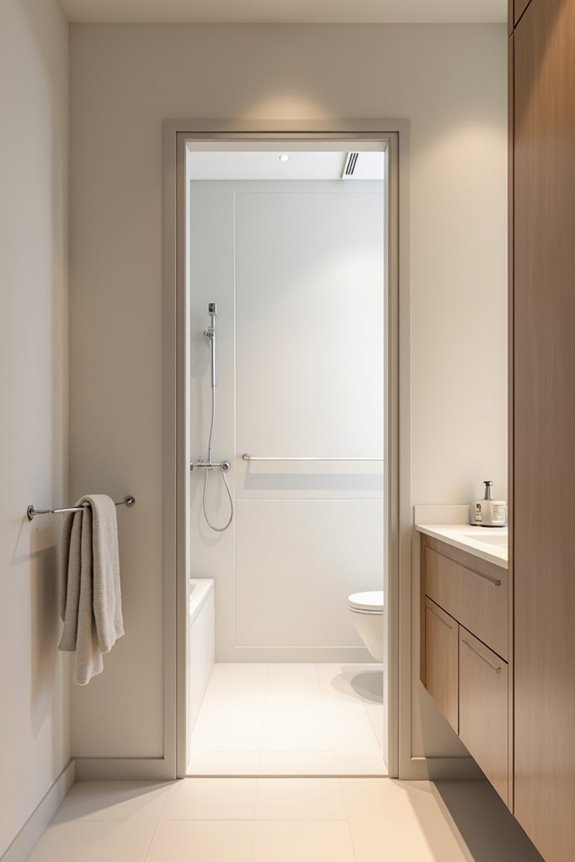
What do you do when your bathroom is cramped and a standard 36-inch door just won’t squeeze through? You have options, and they work well.
Pocket doors slide right into the wall, giving you maximum floor space. Bi-fold doors fold neatly to the side. Sliding barn doors add character while saving room. If you’re working with smaller spaces, 24-inch or 28-inch doors fit tight layouts, though they’re trickier for aging-in-place concerns.
Here’s what to consider first: reversing your door swing can improve clearance without touching the rough opening. Reducing vanity size helps too. Pocket door rough openings need about 2 inches extra width and 2.5 inches height for proper fit.
When nothing else works, try two small French doors or barn door hardware. These alternatives preserve your space while making access easier. You’re solving a real problem with practical solutions.