
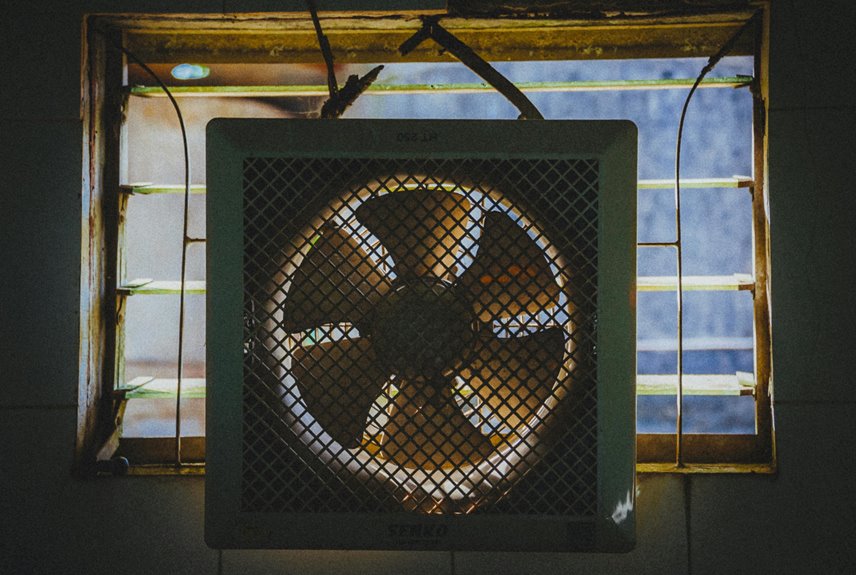
No, bathroom fans won’t cool your house—they’ll actually cost you money. When you run an exhaust fan, it pulls conditioned air right outside while creating negative pressure that sucks in hot, humid outdoor air through cracks and leaks. This pressure imbalance forces your AC to work harder, wasting energy and increasing your bills. If you want real cooling solutions, there are better approaches that actually protect your home’s comfort and efficiency.
Can Bathroom Fans Actually Cool Your House?
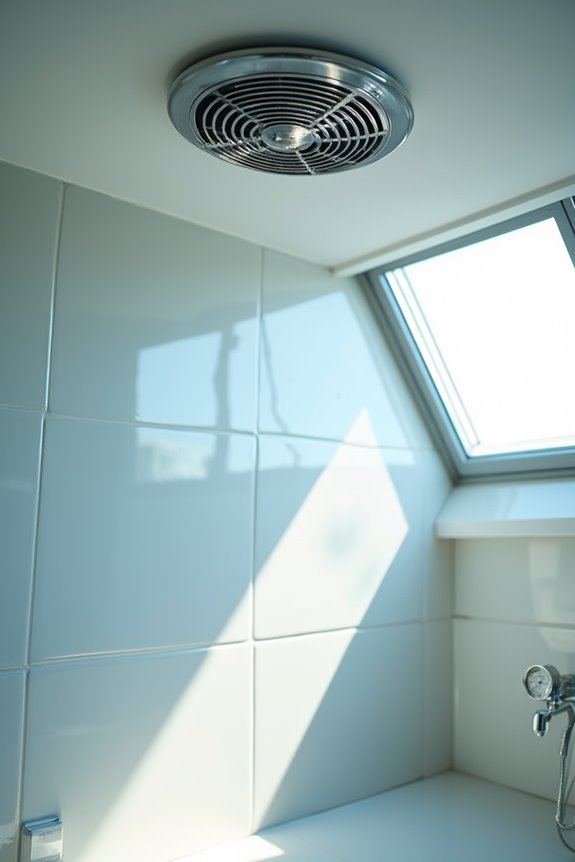
Your bathroom exhaust fan moves air out, sure. Yet this creates negative pressure inside your home. That means warm, humid outdoor air gets pulled back in through cracks and leaks you didn’t know existed. Your ventilation efficiency drops fast.
The real problem? That fan isn’t cooling anything. It’s just moving air around while potentially making your AC work harder. Without balanced intake, you’re fighting against yourself. Summer cooling loads spike. Winter heating follows suit.
Understanding how your home’s air pressure system works matters more than relying on a single fan to solve your temperature control problems.
Why Bathroom Fans Fail at Whole-House Cooling
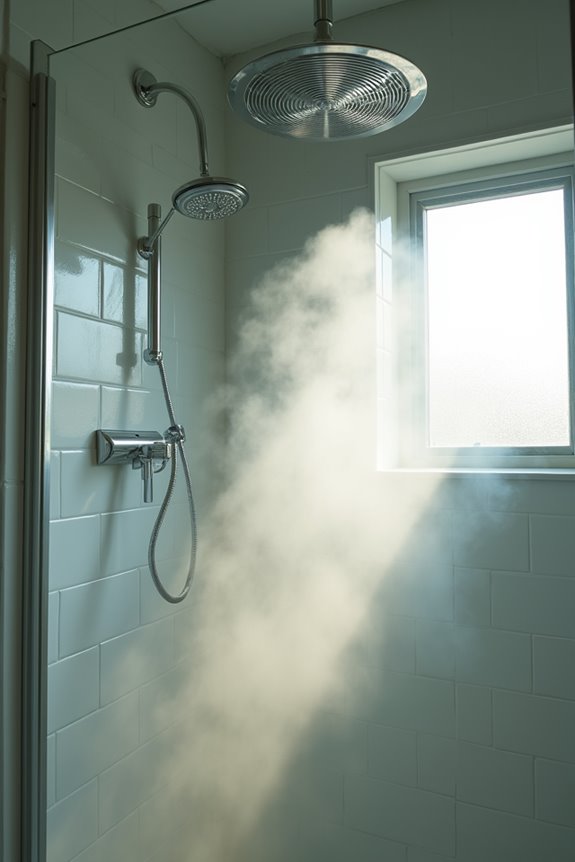
I learned the hard way that running a bathroom fan to cool your whole house actually creates more problems than it solves. When you’re exhausting air out without replacing it, you’re creating negative pressure inside—meaning your home starts pulling in outside air through cracks, gaps, and even your chimney, which can backdraft dangerous gases back into your living spaces. That exhaust-only imbalance is why you’ll feel stuffy rooms and higher humidity instead of the cool relief you were hoping for.
Exhaust-Only System Imbalance
an exhaust-only system creates negative pressure. Stale air lingers while fresh air struggles to enter. You’re basically fighting against your own ventilation. Pairing your bathroom exhaust with controlled fresh air intake works better. Even running a smaller unit continuously beats sporadic high-power exhaust. That airflow balance improves how your home actually performs.
Negative Pressure Backdraft Risk
Why does turning on your bathroom exhaust fan sometimes feel like you’re sucking trouble into your home?
Here’s what I discovered: running that fan creates negative pressure inside. Your house becomes a vacuum. When air rushes out faster than fresh air enters, backdrafting happens—dangerous combustion gases from your gas furnace or water heater get pulled backward into living spaces. That’s genuinely scary.
The solution? Balanced ventilation matters most:
- Run your exhaust fan continuously at modest CFM rather than high-power bursts
- Pair it with a controlled fresh-air intake to equalize pressure
- Avoid exhaust-only systems that leave your home gasping
- Consider pressure-sensitive dampers that prevent dangerous backdrafting
You’ll remove moisture safely without creating hazards.
The Real Cost: How Exhaust Fans Drain Winter Heat
When you run that bathroom exhaust fan continuously during winter, you’re basically punching a hole in your home’s thermal envelope—and it costs real money. A modest 70 CFM exhaust fan pulls about 3,260 BTU/hr of your heating energy right outside. That’s roughly 700 kilowatt-hours monthly if you keep it running year-round—money you’re literally venting away.
The math gets worse with temperature differences. When it’s 40°F colder outside, that ventilation energy loss climbs significantly. Your heating system has to work harder replacing warm air you’ve exhausted.
Here’s the tension: you need that CFM for moisture control and air quality. But continuous operation? That’s expensive. The real cost isn’t just the fan’s electricity—it’s your heating load rising to compensate. Smart operation beats constant running every time.
Pressure Problems: Why Exhaust-Only Systems Backfire
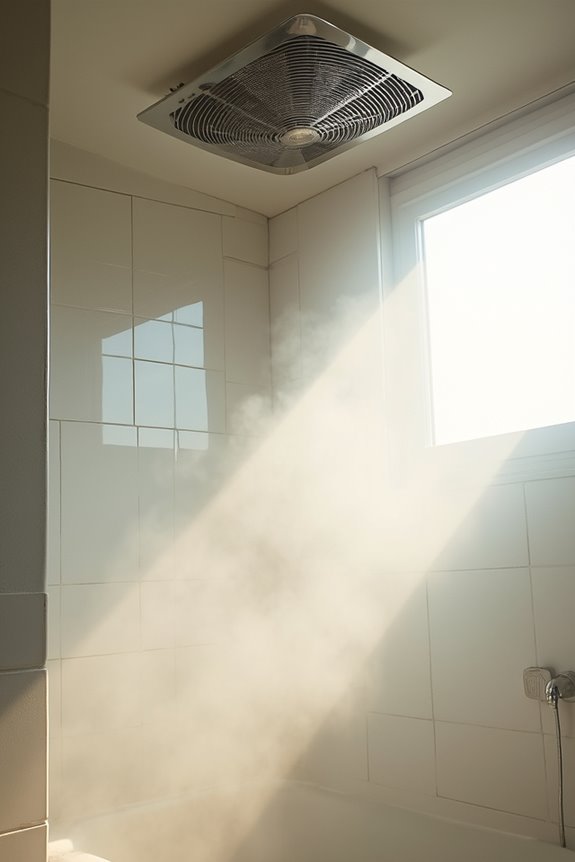
Exhaust-only systems create negative pressure that pulls stale air back in through cracks, actually worsening indoor air quality.
So you’ve got that bathroom fan running, pulling moisture and stale air right out of your house—sounds good, right? Well, here’s where things get tricky. An exhaust-only system creates negative pressure inside, which actually pulls stale air in through cracks and leaks. This backdrafting problem messes with your indoor conditions in unpredictable ways.
When you run that 110 CFM fan without proper fresh-air intake, you’re creating an imbalance that worsens air quality and wastes energy. Here’s what happens:
- Negative pressure pulls outdoor air through uncontrolled leaks
- Moisture gets trapped in walls and crawl spaces
- Your HVAC system works harder to compensate
- Indoor air quality actually declines instead of improving
The real solution? Pair a smaller, continuous exhaust unit with a pressure-sensitive fresh-air source. That’s how you keep your home comfortable without the backfire.
Whole-House Fans: When They Actually Work
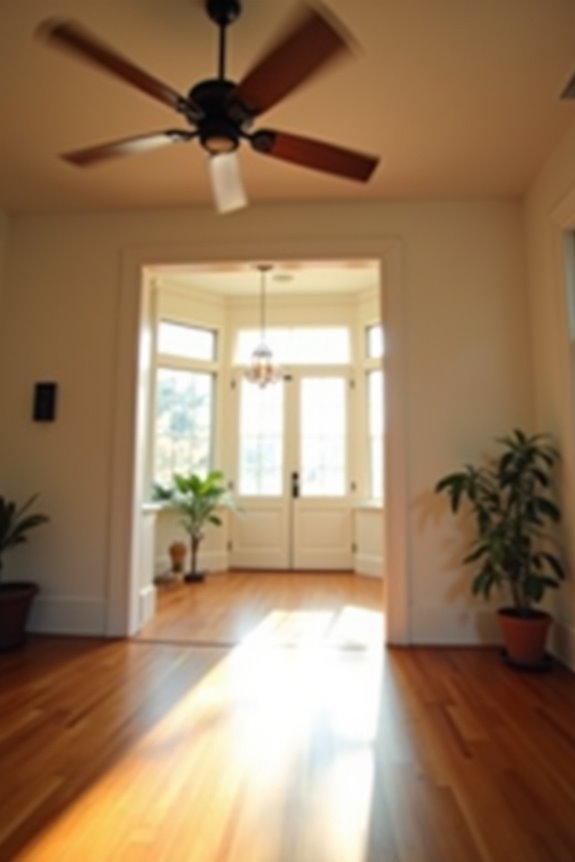
I’ve found that whole-house fans work best when you’re willing to accept some real trade-offs—they’ll cool your home fast, but you’re also constantly moving air in and out, which means you’re losing conditioned air whenever they run. Here’s what I learned: if you calculate your heat loss during operation, you’re looking at potentially significant energy waste during shoulder seasons when you don’t really need aggressive cooling. The trick is running them strategically—early mornings and evenings when it’s cooler outside—rather than treating them like an all-day solution, because otherwise you’re just pumping your climate-controlled air right out through the attic.
Continuous Operation Trade-Offs
it sounds great in theory, but the reality’s a bit messier.
Continuous operation burns energy fast. You’re pulling air through your entire home constantly—those air changes add up on your electric bill. Plus, you can’t run it during winter without losing serious heat. That sealed cover I mentioned? You’ll need it, or you’re basically throwing money out the window.
Here’s what I’ve learned:
- Running 24/7 defeats the seasonal purpose whole-house fans were designed for
- Attic ventilation gets stressed when the whole-house fan operates nonstop
- Your electricity costs climb significantly with continuous operation
- Winter heating loss makes year-round use financially wasteful
The best approach? Use it strategically during cool mornings and evenings. You’ll get better results and keep your wallet happy.
Heat Loss Calculation Methods
I’ll be honest: the math gets messy. But here’s what matters. Your CFM rating tells you airflow volume. That airflow carries heat outdoors. We calculate ventilation heat loss using air mass, temperature difference, and runtime.
| Method | CFM | Temp Delta | BTU/Hour |
|---|---|---|---|
| Crude Estimate | 70 | 40°F | 3,260 |
| HVAC Equivalent | 4,200 | 40°F | 5,840 |
| Monthly Impact | 70 | Winter | 700 kWh |
| Real-World Factor | Variable | Insulation-Dependent | Adjusted |
The bottom line? Your insulation, leakage, and thermostat strategy matter more than raw numbers. That’s what determines whether you’re losing money or keeping costs under control.
Seasonal Ventilation: Adapting Your Approach Year-Round
How does your home’s ventilation strategy actually change when the seasons shift? I’ve learned that you can’t just run bathroom fans year-round and expect the same results. In summer, ventilation helps a little with cooling, but it’s not your main weapon. Winter’s different—you’re fighting heat loss, so running fans constantly wastes energy your boiler’s working hard to provide.
Here’s what actually matters:
- Humidity control: Summer air’s wetter; winter’s drier. Each season brings different moisture levels that affect your comfort.
- Dew point differences: Outdoor air temperature and moisture shift seasonally, changing your cooling load.
- Airtight seals: Winter demands covers on vents to prevent heat escape.
- HRV systems: These balanced approaches work year-round without excessive energy waste.
Your home needs flexibility. That’s where real comfort lives.
Why Attic Ducts Often Work Against You
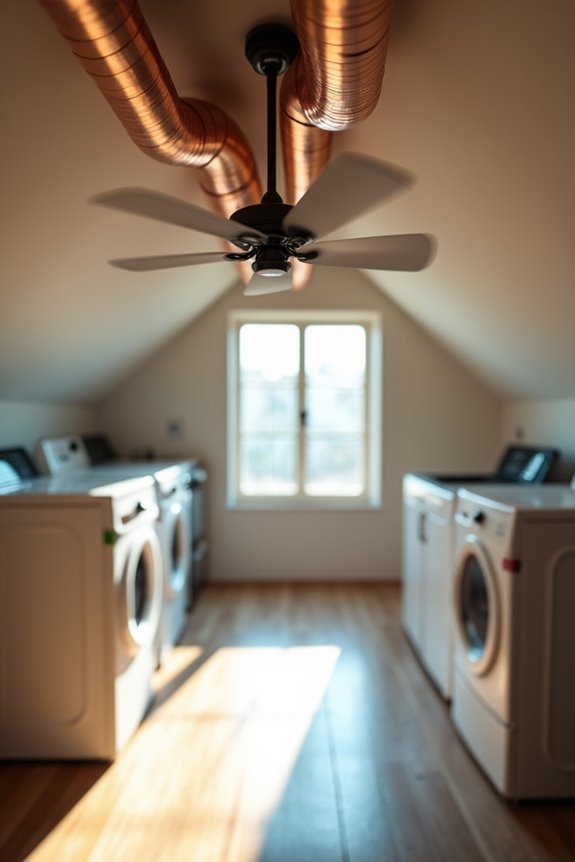
When I routed my bathroom exhaust ductwork through the attic, I quickly learned that hot air rising during summer basically turns those ducts into heating elements working against my cooling goals. The real problem is that uninsulated or poorly insulated ducts sitting in a 130-degree attic lose all their cooling power before the air even exits your home, so you’re exhausting conditioned air that’s already being reheated. I’ve since wrapped my ducts with cellulose insulation and kept them away from direct insulation contact—a straightforward fix that actually works in keeping that cool air cool until it leaves.
Duct Work Heat Absorption
Your bathroom fan’s cooling efforts can actually backfire if your ductwork runs through the attic. I learned this the hard way when my AC bills stayed stubbornly high despite running fans constantly.
The problem? Hot attic air surrounds those ducts, warming the cool air traveling through them before it reaches your living spaces. It’s like trying to cool your house while simultaneously heating it. Your system works harder. Your energy bills climb. It’s frustrating.
Here’s what’s actually happening:
- Ducts absorb attic heat, reducing cooling efficiency significantly
- Warm air expands into living areas, increasing your cooling load
- Supply air arrives warmer than it should be
- Proper insulation and sealing become necessary solutions
The fix involves insulating those ducts properly and considering radiant barriers to reflect heat away.
Attic Temperature Expansion Issues
Why do attic ducts sabotage your cooling efforts? When attic temperature soars to 140 degrees, your ducts absorb that heat like sponges. Hot air expands inside them, creeping into your living spaces and undoing all your cooling work. It’s frustrating because you’re paying to cool air that’s getting reheated before it reaches you.
The real problem? Poor attic ventilation traps this heat. Your ducts sit baking in it, transferring warmth directly into your home. That’s why experts recommend radiant barriers and burying ductwork in blown cellulose—they shield ducts from heat transfer.
You’ll need proper attic ventilation improvements: roughly two to four times your normal vent area. It sounds like a lot, but it directly impacts how well your cooling system performs. Your comfort depends on it.
Cellulose Burial Protection Strategy
Now here’s where things get practical—we’ve talked about how attic heat sabotages your ducts, but the real solution is burying them. After you install a radiant barrier, you can tuck your ductwork beneath blown cellulose insulation. This protects them from that brutal attic temperature that’s working against your cooling efforts.
Here’s why this matters:
- Shields ducts from heat damage – Cellulose blocks radiant heat from reaching your duct insulation
- Stops hot air expansion – Buried ducts can’t fill with scorching attic air that undermines efficiency
- Improves overall performance – Your system delivers cool air instead of fighting uphill
- Maximizes energy savings – You’re finally working with your HVAC, not against it
When you bury those ducts strategically, you’re joining homeowners who’ve actually solved their attic cooling problem.
Heat Recovery Ventilators: A Smarter Alternative
How much energy do you think you’re wasting every time your bathroom fan sucks warm air straight out of your house?
That’s where heat recovery ventilators come in. Unlike standard exhaust fans, HRVs swap indoor and outdoor air while capturing heat you’d otherwise lose. This matters more than most people realize.
Here’s the deal: you get fresh ventilation without the energy drain. HRVs balance your home’s air pressure, preventing the backdraft problems exhaust-only fans create. Sure, they cost more upfront and need professional installation. But they deliver superior humidity control and real energy efficiency.
Think of it as upgrading from a basic fan to a system that actually respects your heating bills. You’re not just removing stale air—you’re reclaiming what makes your home comfortable. That’s the smarter choice.
Safe Ways to Run Bathroom Fans for Humidity Control
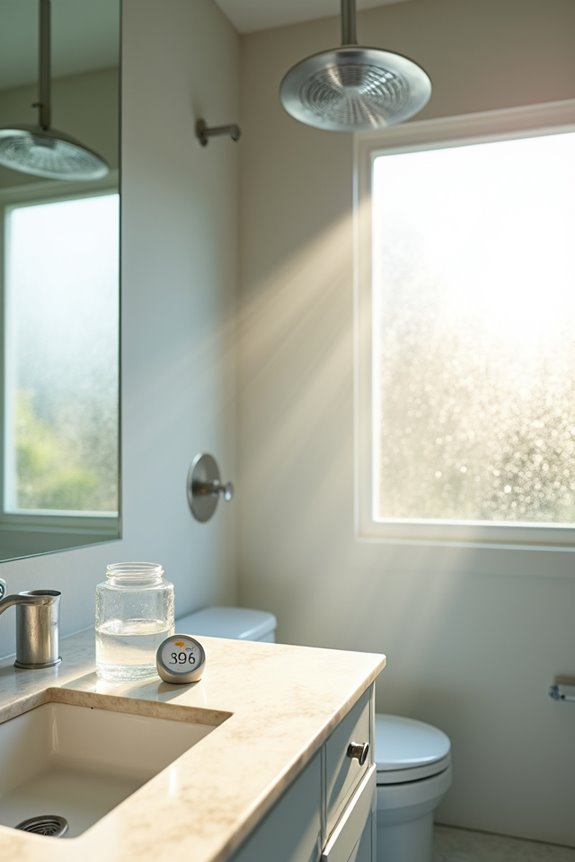
When should you actually run that bathroom fan?
Timing matters more than you’d think. Running your exhaust fan isn’t just about clearing steam—it’s about managing moisture strategically. Here’s what works:
- Compare dew points: Check if your bathroom’s dew point exceeds the outdoor dew point before exhausting air
- Monitor temperature differences: Run the fan when it’s cooler outside than inside to avoid pulling warm, humid air indoors
- Use brief cycles: Run it for 15-20 minutes after showers rather than constantly
- Watch for mold risks: Continuous exhausting can push moisture toward cooler surfaces, creating mold problems if drainage isn’t managed properly
Keep these guidelines in mind because humidity control isn’t complicated—it’s just intentional. When you exhaust at the right moment, you’re actually protecting your home while keeping everyone comfortable.
Simple Thermostat Tweaks That Cut Cooling Bills
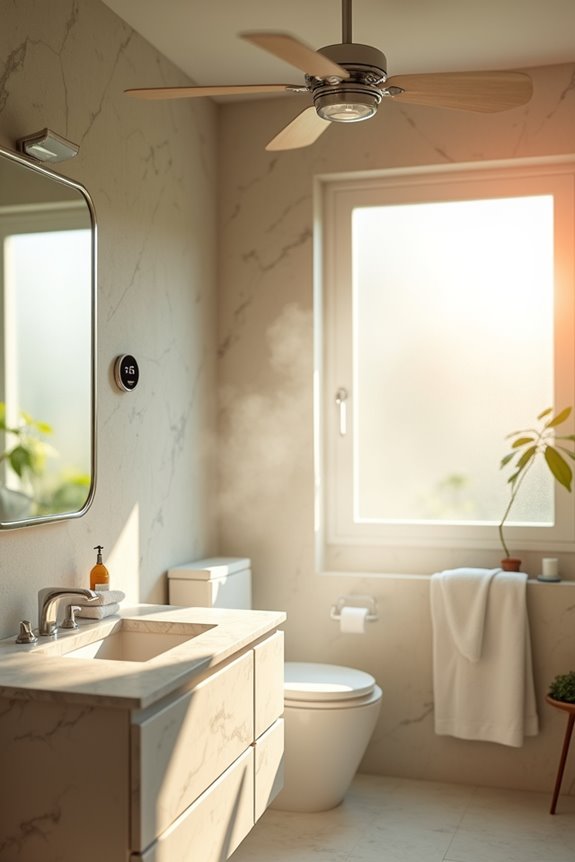
they’re actually one of the easiest places to save money on cooling without feeling uncomfortable. I picked one temperature—say 78 degrees—and I just leave it there day and night. No adjusting. This single shift cuts the work your air conditioner does per hour, which caught my attention.
Think about it: every time you crank it down, your AC kicks into overdrive. That wastes energy like crazy. But when I keep it steady, my unit runs smoothly without those exhausting temperature swings.
Better air circulation happens naturally when your system isn’t constantly hunting for different settings. I paired this with closing curtains during hot afternoons. Together, these tweaks dropped my cooling bills noticeably. Simple, right? Just set it and forget it.