
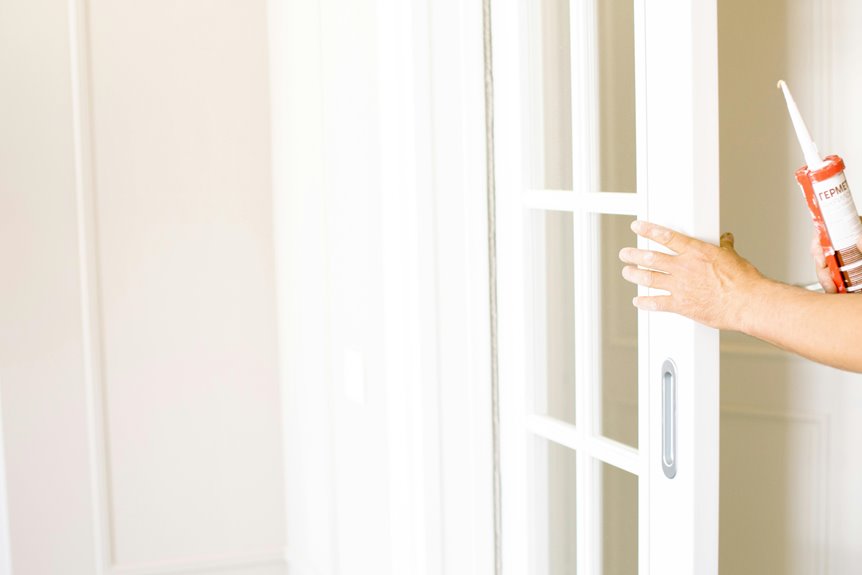
I’ll show you how silicone decorators caulk—that affordable sealant under ten bucks—protects your bathroom from water damage by creating a sealed, finished surface.
You’ll apply it along tub joints, sink edges, and toilet bases where moisture commonly enters.
The method involves: prep surfaces thoroughly, use painter’s tape for crisp lines, smooth with a damp finger, and allow it to cure for 24-48 hours.
Proper application and maintenance will keep your bathroom protected for years.
What Is Decorators Caulk and Why It Works in Bathrooms?
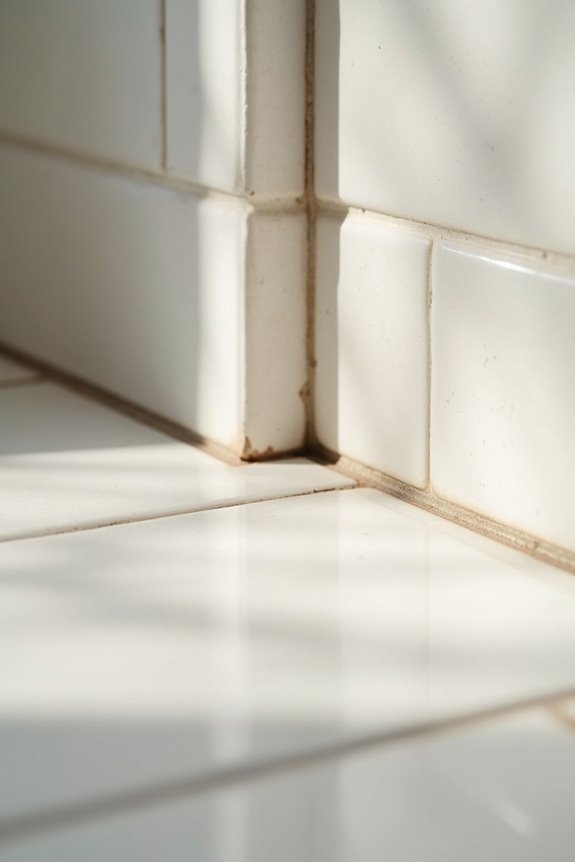
When you’re standing in your bathroom looking at those annoying gaps between your tiles and tub, you’re probably wondering how to fix them without calling a professional. Those spaces feel like an eyesore. That’s where decorators caulk comes in. It’s a flexible sealant that fills gaps and creates a polished, finished look. For bathrooms, I recommend silicone caulk specifically. Why? Because it offers superior moisture resistance compared to acrylic alternatives. Silicone works harder against water exposure and temperature changes that bathrooms constantly experience. This bathroom sealant also resists mold, which is essential in humid environments. You’ll find it in colors matching your fixtures or clear options. It’s affordable—usually under ten dollars—and improves your space noticeably.
Five Bathroom Zones That Need Caulking Protection
I’ve found that protecting your bathroom from water damage really comes down to sealing five key spots, and I’m going to walk you through the three most important ones: your bathtub and shower joints, your sink setup, and the area around your toilet. Each of these zones handles constant moisture and splashing, so they’re prime targets for water sneaking in where it shouldn’t. When you seal these areas properly, you’re giving your bathroom a solid defense against the mold, mildew, and structural damage that’ll cost you far more to fix later.
Bathtub and Shower Joints
Why do bathrooms spring leaks in the most inconvenient places? The tub/shower joint is ground zero for water damage. I’ve learned this the hard way—water sneaks behind tiles and rots walls if you’re not careful.
Here’s what I do: I use silicone caulk specifically designed for bathrooms. It’s flexible, waterproof, and offers serious mold resistance. This matters because moisture loves hiding in cracks.
The application takes patience. I apply a smooth, uniform bead along the entire joint, then finish it with a damp finger for a polished appearance. It’s honest work that delivers results.
I check my caulking every few years. If gaps appear or mold shows up, I recaulk immediately. This simple maintenance protects your entire bathroom from expensive water damage. It’s the best investment you’ll make.
Kitchen Sink Perimeters
Your kitchen sink sits right where water wants to escape—and it will if you don’t seal that gap between the sink lip and countertop.
I learned this the hard way. Water seeping underneath causes real damage. That’s why caulking your sink perimeter is so important.
I use mold-resistant silicone labeled for wet areas. It’s your best defense against moisture and mildew. Pick a color matching your sink or countertop for a seamless look.
Here’s my process: I remove old caulk completely, then clean everything thoroughly. No soap scum or oils allowed. I apply a steady 45-degree bead around the entire joint, smoothing it with a damp finger.
Then comes patience. I wait the full 24-48 hours before running water. That cure time provides the protection your sink needs.
Toilet Base Sealing
Once you’ve tackled that sink perimeter, you’ll notice water loves finding another escape route—straight under your toilet base. I learned this the hard way when moisture crept underneath and created a moldy mess. That’s why I now use a mold-resistant silicone sealant for toilet base sealing.
| Task | Product Type | Why It Works |
|---|---|---|
| Sealing | Bathroom-grade silicone | Withstands humidity |
| Avoiding | Acrylic latex caulk | Cracks under moisture |
| Cleaning | Mildew cleaner | Removes old residue |
| Finishing | Damp finger tool | Creates clean seal |
Before applying your mold-resistant caulk, I remove old caulk completely and clean thoroughly. Let everything dry fully—this is important. Apply the bead along that gap, smooth it with a damp finger, and you’re done. Recaulk every 5–10 years. Your bathroom will benefit from this maintenance.
Why 100% Silicone Outperforms Acrylic Latex
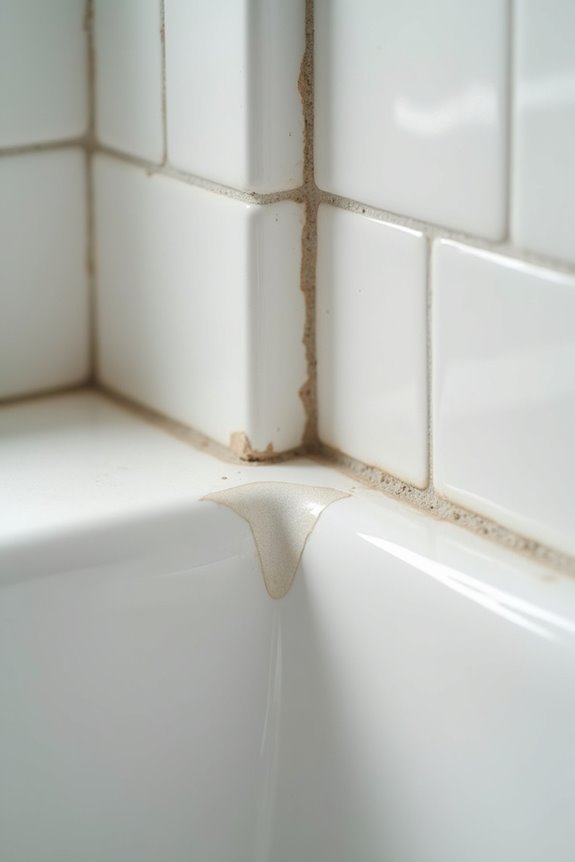
I’ve learned that 100% silicone caulk outperforms acrylic latex in your bathroom because it resists water so much better—it won’t break down or fail when your shower’s running hot and steamy every single day. What impressed me is how silicone stays flexible and stretches with your tiles and fixtures, so you won’t get those frustrating cracks and gaps that show up after a few months. Plus, most bathroom-grade silicone comes with built-in mold and mildew protection, which means you’re not fighting nasty growth along your joints the way you would with other caulks.
Superior Water Resistance
When it comes to keeping moisture out of your bathroom, silicone caulk performs better than acrylic latex. Silicone sealants create a waterproof barrier that holds up in wet environments. Acrylic latex breaks down when water constantly hits it. Silicone doesn’t.
What makes silicone reliable for bath/shower use? It bonds tightly to surfaces and resists water penetration at a molecular level. That means no moisture sneaking behind your tiles or seeping into walls. You’re protecting your bathroom’s structure, not just the surface.
When you choose silicone labeled specifically for bath/shower use, you’re investing in water resistance that lasts. That’s the difference between a sealant that works and one that fails when you need it most.
Flexibility And Durability
Your bathroom’s tiles and walls expand and contract with temperature changes and moisture—and that’s where 100% silicone really shines.
I’ve learned that silicone sealant stays flexible while acrylic latex becomes brittle and cracks. This flexibility means your joints won’t split apart as everything shifts. Here’s what makes silicone the smart choice for bath/shower use:
- Accommodates movement without peeling or cracking over time
- Maintains elasticity in high-humidity environments
- Resists shrinkage that causes gaps and leaks
- Lasts years longer than acrylic alternatives
The anti-fungal properties keep your bathroom protected too. When you choose a quality silicone sealant labeled for bath/shower use, you’re investing in something that actually moves with your home instead of fighting against it. That’s peace of mind you’ll appreciate.
Mold And Mildew Protection
That flexibility I just mentioned? It works against mold and mildew. Here’s why: silicone sealants come packed with built-in anti-fungal technology that actually fights growth throughout their entire life. I’m talking about real protection—not just wishful thinking.
Acrylic latex caulk? It can’t do that. Without inherent mold resistance, it becomes a welcoming home for mold when moisture hits constantly. You’ll find yourself redoing work frustratingly often.
Your bathroom stays damp. That’s just reality. Silicone’s waterproof grid stays flexible, preventing cracks where moisture sneaks in and mold thrives. Rigid acrylic splits and traps water inside those gaps.
When you choose silicone sealants for bathroom caulk, you’re making a choice that lasts—15 to 20 years of genuine mold and mildew defense. That’s protection you can rely on.
Remove Old Caulk and Prep Surfaces Safely
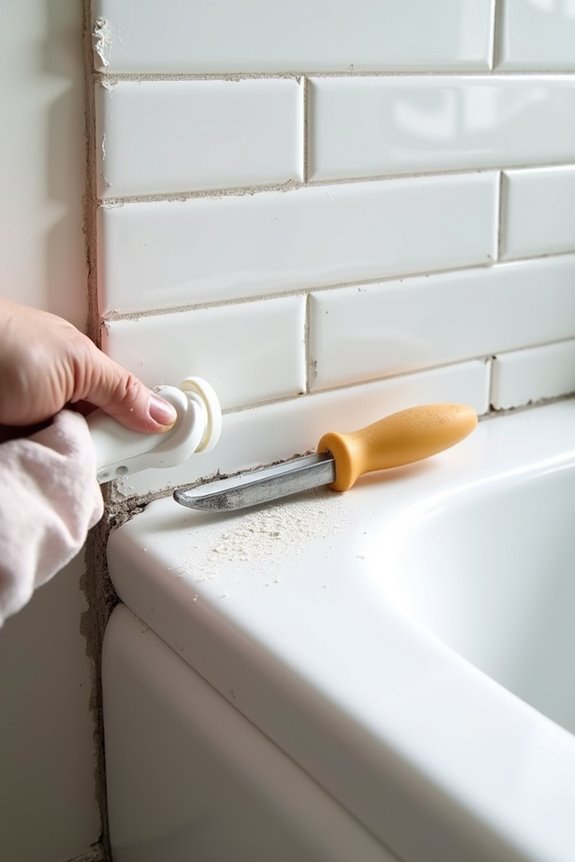
How do you get rid of old caulk that’s been sitting in your bathroom for years? I’ll walk you through the caulk removal and surface preparation process so your bathroom caulking stays fresh and lasts longer.
Remove old bathroom caulk properly to ensure fresh, long-lasting results and prevent future mold problems.
Here’s what I do:
- Use a utility knife or caulk removal tool to scrape away old material completely
- Apply a caulk softener solution if the caulk resists—it works well
- Wipe everything down with rubbing alcohol and a clean rag
- Let surfaces dry completely before moving forward
This prep work matters. I’ve learned the hard way that rushing this step leads to poor adhesion and mold problems later. When I’m thorough with surface preparation, my new caulk bonds well and stays cleaner longer. Painter’s tape helps create crisp lines too.
Apply Decorators Caulk: Step-by-Step Technique
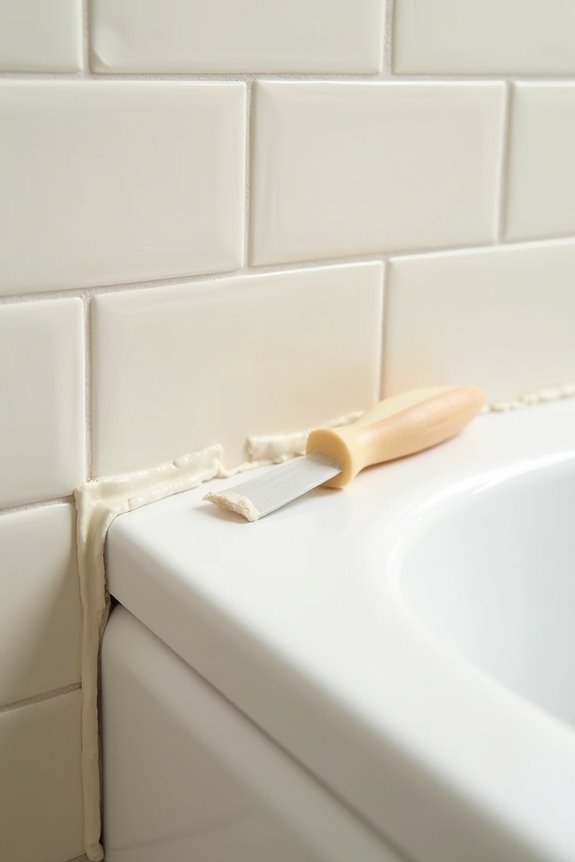
Once you’ve got those surfaces prepped and dry, you’re ready to apply the caulk. I load my caulk gun at a 45-degree angle—this angle produces smooth, professional results.
Here’s my process: I apply steady pressure, laying down a consistent bead along the seam. Then comes smoothing the bead. I use painter’s tape on both sides of the joint for crisp lines, then remove it while the caulk’s still workable.
For the actual smoothing, I dip my finger in soapy water and gently shape that bead into a slight curve. This concave shape sheds water better and improves performance.
Finally, wait the full 24-48 hours before exposing it to moisture. This waiting period allows proper curing.
Smooth Your Bead for a Professional Finish
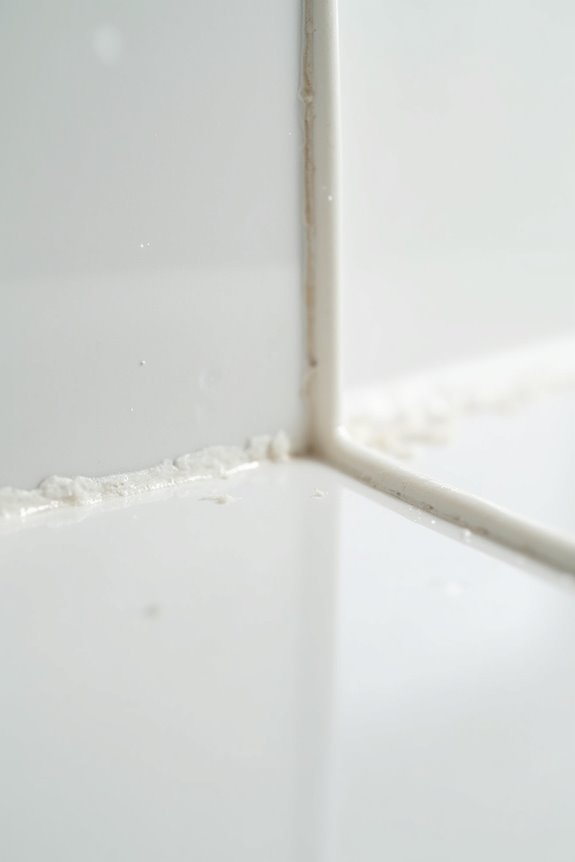
Getting that caulk line looking smooth and polished is the difference between a job that looks amateur and one that looks like a pro did it.
A smooth caulk line separates amateur work from professional results.
I’ve found two methods that really work:
- Finger Method: Dip your finger in soapy water and draw along the bead in one continuous motion with steady pressure
- Tape Method: Apply masking tape on both sides with a gap wider than your desired bead, caulk between them, then remove while workable
- Maintain angle: Keep your caulk gun at roughly 45 degrees for consistent results
- Re-wet frequently: Keep your finger or tool wet to remove excess caulk and maintain smoothness
Aim for that concave bead shape—it’ll shed water effectively and look professional. This approach works.
How Long for Bathroom Caulk to Cure and Set?
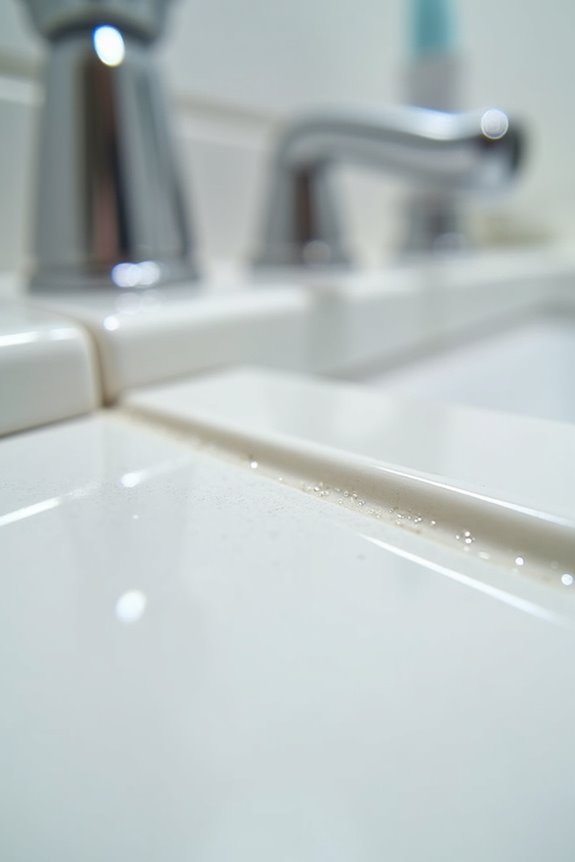
You’ve just smoothed that perfect bead and stepped back to admire your work—so when can you actually use your shower?
Most bathroom sealant needs 24 to 48 hours before it fully cures. That’s when it reaches maximum strength and moisture resistance. However, humidity and surface moisture can extend that timeline.
Some quick-set silicones become shower-ready in just 2 hours for light contact. For optimal results, wait the full curing time.
Caulk cure time matters most in bathrooms since moisture is constantly present. Keep that area dry and well-ventilated during curing. Check your product’s instructions—they’re your best reference. Follow the timeline, and your caulk will deliver years of reliable performance.
Common Application Mistakes and Quick Fixes
Even with the best intentions, it’s easy to mess up your caulking job before you’ve even started. I’ve learned this the hard way, and I want to help you avoid my mistakes.
The biggest pitfalls I’ve encountered:
- Skipping surface prep – Dust and moisture prevent adhesion and cause failure
- Applying too much caulk – Excess material creates messy, weak seals
- Caulking wet surfaces – Moisture blocks proper bonding completely
- Neglecting the smoothing tool – Rough beads look unprofessional and trap mold
The fix? Take your time with prep work. Use painter’s tape for crisp lines. Smooth your bead with a damp finger or smoothing tool before it sets. These simple steps will improve your project results significantly.
Extend Caulk Life: Cleaning, Inspection, and Recaulking
Once you’ve nailed your initial application and let that caulk cure properly, your work isn’t really done—it becomes an ongoing maintenance responsibility. I check my bathroom joints every few months for trouble spots. You’ll want to look for cracking, discoloration, or mold creeping in.
| Issue | What to Look For | Action |
|---|---|---|
| Cracks | Fine lines splitting | Recaulk timing: plan replacement |
| Mold | Dark spots or growth | Clean with mild bathroom cleaner |
| Discoloration | Yellowing or staining | Inspect for moisture damage |
| Moisture | Water seeping through | Dry thoroughly before recaulking |
Here’s my routine: I clean caulk lines with mild cleaner and isopropyl alcohol. Then I make sure everything’s completely dry. When recaulking, I use a 45-degree tube cut and smooth with a damp finger. Full cure takes 24–48 hours. Consistent caulk maintenance and mold prevention keeps your bathroom sealed and fresh.