
In 2026, I’d budget anywhere from $2,000 for a small refresh to $80,000+ for a full luxury overhaul.
Most folks spend between $18,500 and $30,000 for a solid mid-range update that’ll recoup about 75–80% when you sell.
Your actual cost depends on bathroom size, whether you’re moving plumbing (expensive!), and material choices like tile and vanities.
Labor eats up 40–65% of your budget, so keeping your existing layout saves serious money.
The specifics of what’ll work best for your home are worth exploring further.
2026 Bathroom Decoration Costs at a Glance
How much should you really expect to spend on a bathroom makeover in 2026? I’ll be honest—it varies quite a bit depending on what you’re doing.
Small bathroom remodels run $2,000 to $15,000+, with mid-range projects averaging around $6,500. That breaks down to $80–$120 per square foot for budget work, $180–$280 for mid-range materials, or $300–$500+ for premium finishes.
Here’s what drives those numbers up: labor costs eat 40–65% of your budget, while decoration-focused upgrades—your vanity costs, tile and fixtures, lighting—have the biggest visual impact. Fair warning: tariffs impact vanity costs by 20–28% compared to 2024, and certain imported materials add another 20–30%. Understanding these bathroom remodeling costs helps you plan realistically before starting.
Bathroom Decoration Cost Breakdown: Budget, Mid-Range, and Premium
Now that you understand the overall costs of bathroom remodels, let’s examine where your money actually goes—because understanding the difference between a budget, mid-range, and premium bathroom is important for planning.
Understanding where your bathroom remodel budget goes is essential for choosing between budget, mid-range, and premium options.
I’m talking about three distinct paths:
- Budget tier ($7,000–$10,000): You’re looking at $70–$100 per square foot with stock vanities around $525–$2,940
- Mid-range ($18,500–$30,000): The national average bathroom remodel sits here at roughly $100–$175 per square foot
- Premium ($50,000–$80,000+): High-end finishes run $175–$250+ per square foot with custom vanities hitting $3,500+
Here’s what matters: vanity and shower/tub costs dominate your material costs, accounting for 40–50% of your budget. When you’re choosing between budget tiers, you’re deciding how much you invest in these key elements and whether trendy tile upgrades—those artisanal options adding $5–$15 per square foot—fit your vision.
What Drives Bathroom Decoration Costs
The real surprise when you’re planning a bathroom remodel isn’t the sticker shock—it’s realizing where that money actually disappears. I’ve learned that plumbing work and electrical work typically consume 40–65% of your bathroom remodeling costs. Your tile and material quality choices matter enormously—quartz countertops cost way more than laminate, and artisan tiles add real expense compared to standard options. Labor rates vary dramatically by region, with plumbers and electricians charging 6–10% more yearly. Here’s what gets me: moving plumbing or redesigning walls? That’s when costs explode. Waterproofing upgrades and shower replacements amplify expenses fast. But keeping your current layout and existing plumbing intact? That’s your path to meaningful savings. Project scope truly drives everything.
How Bathroom Size and Layout Affect Your Budget
Your bathroom’s size and layout are two of the biggest budget wildcards you’ll face. When you’ve got a tiny powder room like a 3×5 space, you’re paying $200 or more per square foot because those fixed costs—your toilet, vanity, and shower—don’t shrink just because the room does. But here’s where it gets real: if you’re thinking about moving plumbing around or completely rearranging your layout, brace yourself, because those changes will hit your wallet hard and become major cost drivers faster than you’d expect.
Small Space Cost Premiums
Why do tiny bathrooms cost so much per square foot? I’ll be honest—it’s frustrating. When you’re working with 40 square feet or less, those fixed fixture costs hit differently. Your toilet, vanity, and shower aren’t getting cheaper just because your space is smaller.
Here’s what I’ve learned:
- A 5×8 bathroom runs $140–$180 per sq ft for mid-range finishes, but fixed costs inflate that number
- Half baths face the highest per-square-foot premiums because plumbing rough-ins and fixture relocations add up fast
- Layout changes—moving plumbing or enlarging showers—instantly push costs into premium territory
The real advantage? Keeping your existing plumbing layout and using standard 60-inch vanities. That’s how you avoid those steep cost premiums on your small bathroom remodel.
Layout Changes and Plumbing
Once you decide to move that plumbing—maybe your toilet’s in an awkward corner or you want the shower on the opposite wall—you’ve officially left the land of affordable fixes. Layout changes and plumbing relocations expand your entire project scope. You’re looking at $25,000 to $80,000 for a full bathroom remodel with structural shifts, compared to $10,000–$25,000 for simpler updates.
Here’s why: moving plumbing affects both labor and materials. New rough-ins, wall modifications, and electrical work stack up fast. Even small bathrooms hit $200+ per-square-foot costs when layouts shift. The per-square-foot cost climbs because nothing stays cosmetic anymore.
Plan ahead. Get multiple bids two to three months before starting. Understanding these plumbing costs upfront helps you budget realistically and avoid surprises mid-project.
Fixed Costs Per Square Foot
How much does bathroom size really matter when you’re calculating costs? It’s honestly the foundation of your entire budget. Here’s what I’ve learned:
- Small bathrooms (40 sq ft or less) often exceed $200/sq ft, totaling $3,500–$12,500
- Standard 50-sq-ft bathrooms range $3,500–$12,500 depending on materials quality
- Larger master baths (100–200+ sq ft) run $12,000–$35,000 with luxury finishes
The real factor to consider? It’s not just square footage—it’s what you’re doing inside that space. When I’m looking at project scope, plumbing and layout changes dramatically shift your cost per square foot. Moving pipes or walls? That multiplies expenses fast. But updating fixtures and vanity within existing layouts? Much friendlier to your wallet. Tile and flooring choices matter too. Understanding these fixed costs helps you plan accurately and know where your money actually goes.
Money-Saving Tactics Without Cutting Quality
What if I told you that remodeling your bathroom doesn’t have to drain your wallet? I’ve discovered that smart choices help keep costs reasonable. Keep your existing plumbing layout—rerouting costs money. Instead, grab a standard 60-inch vanity from a big-box store rather than custom cabinets. You’ll save thousands while keeping functionality intact.
For tile selection, choose porcelain over natural stone. Larger tiles mean fewer grout lines and faster installation, cutting labor costs dramatically. Here’s what works: tackle DIY labor yourself. I handle painting, demolition, and basic fixture installation. You’ll slash expenses by 20–30% without sacrificing quality.
Get three quotes early. Shop holiday sales. Separate materials from labor costs to prevent scope creep. These tactics let you create a functional bathroom while managing your budget.
2026 Trends and Material Costs
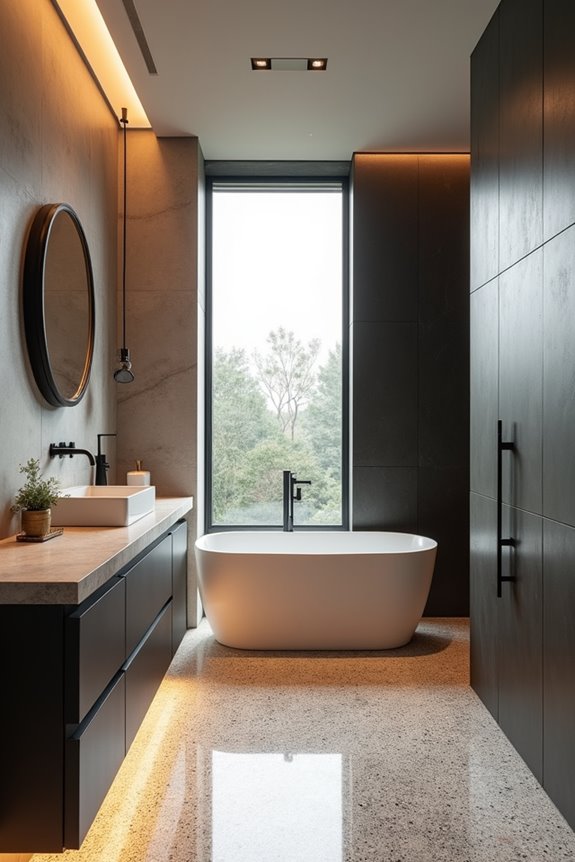
Now that you’ve got your budget locked down, let’s talk about what’s actually popular right now—because 2026 bathroom design is different from what you might’ve expected. You’re seeing warm earth tones everywhere—think clay, olive, and terracotta—paired with natural materials that feel inviting and real.
Here’s what’s trending with costs:
- Tile choices dominate spending – Standard tiles run $70–$150 per square foot installed, while handmade artisanal tiles add $5–$15 extra
- Larger-format tiles require specialized adhesives and precision, bumping installation costs higher
- Smart material swaps – Porcelain-look materials mimic premium aesthetics at lower cost
Premium fixtures like heated floors and frameless showers still drive costs up. But here’s the thing: you can embrace 2026 trends without choosing every expensive option. Mix premium pieces with budget alternatives, and you’ll achieve that current look while staying financially responsible.
Smart Upgrades: Costs and Cost Recovery
When you’re planning your bathroom remodel, you’ve probably wondered if those fancy smart features are actually worth the money—and honestly, some of them really are. Heated flooring runs $300–$600 and saves energy over time. Smart toilets and leak detectors are popular in 2026. You can grab leak detectors for $50–$200, or bundle multiple smart upgrades under $1,200 total. Here’s the thing: keep your existing plumbing layout intact. Avoiding valve relocations saves serious cash. While the exact ROI on smart upgrades isn’t crystal clear, preventing water damage through leak detection pays for itself quickly. Smart bathroom remodeling feels modern and practical—you’re joining folks who actually care about protecting their spaces. That’s worth something.
Does Bathroom Decoration ROI Justify the Investment?
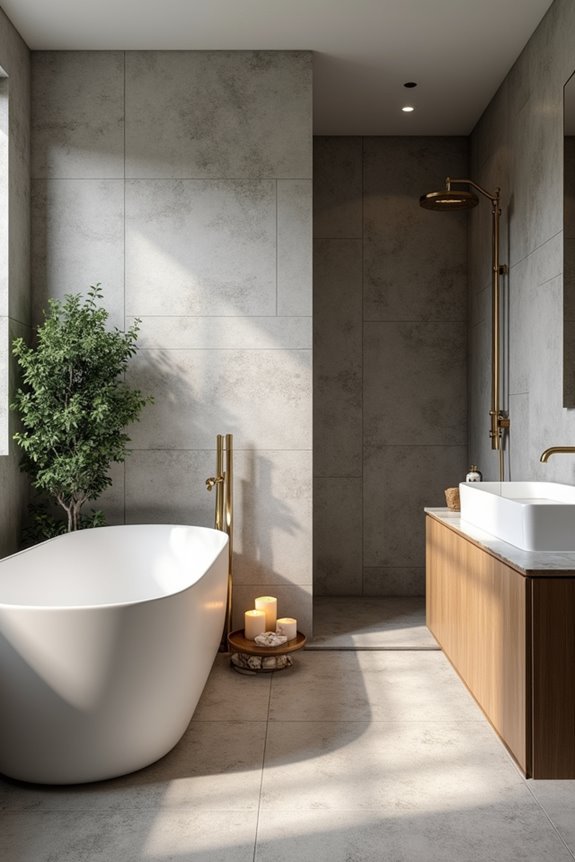
You’ve probably installed that leak detector or heated floor and thought, “Okay, but will I actually get my money back?” That’s the real question, isn’t it—and it’s different from asking if smart features feel nice.
Here’s what matters for remodel ROI:
- Mid-range projects recoup 74–80% at resale, so modest cosmetic upgrades beat luxury splurges
- Your primary bathroom should stay around 5–10% of home value to protect resale value
- Paint, fixtures, and tile quality drive returns far more than expensive extras
For a $400,000 home, that’s roughly $12,000–$20,000 spent wisely. Skip the gold-plated everything. Instead, focus on smart bathroom decor—durable finishes and thoughtful tile choices—while keeping your plumbing layout unchanged. Project costs stay reasonable when you’re strategic. That’s how you build genuine value.